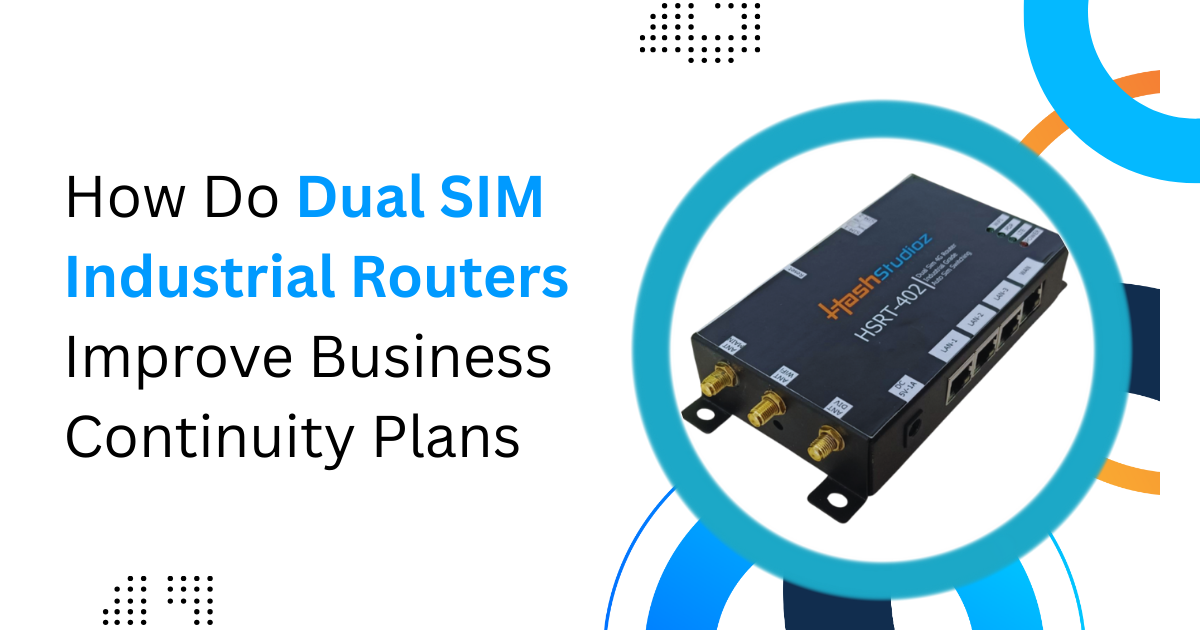
Network connectivity is critical for industrial operations. Factories, utilities, logistics systems, and remote monitoring sites rely on continuous communication for automation, data collection, and safety. Even brief outages can halt production, delay deliveries, or cause data loss. A Dual SIM Industrial Router is a key tool for maintaining continuous connectivity, making it an essential part of any business continuity plan.
By using two SIM cards from different carriers, these routers ensure operations continue without interruption. A Dual SIM 4G LTE Industrial Router provides high-speed cellular connectivity with automatic failover, which reduces downtime and improves operational reliability.
The Importance of Network Reliability in Business Continuity
Business continuity plans aim to keep operations running during unexpected events. Network failures can directly affect revenue, safety, and operational efficiency. Consider these facts:
- The average industrial downtime costs $260,000 per hour in manufacturing operations.
- 75% of remote monitoring failures are caused by network outages.
- Data loss during outages can disrupt compliance reporting and maintenance schedules.
Industrial networks must be resilient. A single SIM or single connection creates a single point of failure. This is where a Dual SIM Industrial Router becomes valuable.
What Is a Dual SIM Industrial Router?
A Dual SIM Industrial Router is a rugged networking device designed for industrial environments. Key features include:
- Two SIM card slots from independent carriers.
- Automatic switching between networks if one connection fails.
- Support for multiple industrial protocols like Modbus, OPC UA, and MQTT.
- Operation in harsh conditions: extreme temperatures, dust, vibration, and electromagnetic interference.
A Dual SIM 4G LTE Industrial Router adds high-speed cellular connectivity with LTE support, making it suitable for real-time data transmission and remote monitoring.
How Dual SIM Industrial Routers Enhance Business Continuity
1. Prevent Network Failures
Industrial operations often rely on a single network. If it fails, the system stops. A Dual SIM Industrial Router connects to two carriers. When one network fails, traffic automatically switches to the second network.
This redundancy ensures continuous connectivity for PLCs, SCADA systems, IoT sensors, and automated machinery.
Example: A remote water treatment facility reduced network downtime to nearly zero after installing dual SIM routers with two separate carriers.
2. Automatic Failover
Dual SIM routers constantly monitor signal strength, latency, and packet loss. If the primary connection drops below a set threshold, the router switches to the backup SIM automatically.
Failover occurs in milliseconds, ensuring uninterrupted connections. This is critical for real-time monitoring systems where even short interruptions can cause costly errors.
Fact: High-performance dual SIM routers can failover in under 300 ms, maintaining uptime over 99.99%.
3. Reliable Data Transmission
Industrial systems generate large amounts of operational data. Interruptions can cause data gaps or loss. A Dual SIM Industrial Router ensures continuous data flow to central servers, cloud platforms, and dashboards.
Example: A solar energy farm using dual SIM LTE routers maintained uninterrupted telemetry from inverters and sensors, improving operational efficiency by 15%.
4. Support Remote Monitoring and Control
A Dual SIM 4G LTE Industrial Router allows engineers to access devices remotely. Tasks include:
- Monitoring device status.
- Updating firmware.
- Reconfiguring networks.
- Detecting and addressing anomalies.
Remote access reduces the need for onsite visits, saving time and cost while maintaining system uptime.
5. Operate in Harsh Environments
Industrial sites are often exposed to harsh conditions. Dual SIM routers are designed to withstand:
- High and low temperatures (-40°C to +75°C).
- Vibrations from machinery.
- Dust and moisture.
- Electromagnetic interference.
These routers maintain reliable connectivity where consumer devices would fail.
The Role of Blockchain, IoT, and AR/VR in Next-Gen Mobile Applications
Technical Advantages
1. Flexible Network Options
Dual SIM routers allow flexible carrier selection, enabling one SIM to connect to a national network and the other to a regional provider. This ensures continuous connectivity during carrier outages.
2. Integration with Industrial Systems
These routers support industrial protocols such as Modbus TCP/IP, OPC UA, Ethernet/IP, and MQTT. This compatibility allows straightforward integration with existing equipment, avoiding major system changes while enabling smart monitoring.
3. Security Features
Enhanced security includes VPN support (IPsec, OpenVPN), firewalls, intrusion prevention, and encrypted remote access. Even during network failover, operational data remains protected, ensuring safe and reliable industrial communication.
Real-World Applications
1. Manufacturing Plants
A remote manufacturing plant faced frequent signal loss. After installing a Dual SIM 4G LTE Industrial Router, connectivity disruptions dropped sharply. Machines and monitoring systems continued operating without interruption. Production data reached management systems reliably, improving decision-making.
2. Energy and Utilities
A solar energy farm uses dual SIM routers to maintain constant communication between inverters, sensors, and central servers. When one network drops due to weather or maintenance, the router automatically switches to the backup network. This ensures uninterrupted monitoring, which is critical for operational safety and efficiency.
3. Transportation and Logistics
Fleet management systems rely on consistent cellular connectivity. Dual SIM Industrial Routers ensure vehicle tracking, route optimization, and remote diagnostics continue even if one network fails. This reduces delays and operational risks.
Best Practices for Deployment
1. Use Independent Carriers
Avoid relying on two SIM cards from the same provider. Using different carriers reduces the risk of outages caused by network-wide failures.
2. Configure Failover Rules
Define clear thresholds for signal strength, latency, or packet loss to trigger automatic failover and maintain uninterrupted service.
3. Test Regularly
Schedule routine failover tests to confirm that backup connections activate correctly and perform as expected during real-world disruptions.
4. Monitor Data Usage
Track SIM data consumption proactively to avoid unexpected overage charges and ensure adequate bandwidth for critical operations.
5. Use Remote Management Tools
Leverage centralized management platforms to monitor performance, push configurations, and maintain visibility across all deployed routers.
Conclusion
A Dual SIM Industrial Router and Dual SIM 4G LTE Industrial Router play a key role in business continuity planning. They provide:
- Continuous connectivity
- Automatic failover
- Reliable data transmission
- Remote monitoring capabilities
- Operation in harsh conditions
These features reduce downtime, prevent data loss, and ensure industrial operations continue uninterrupted. Organizations that deploy dual SIM routers can meet stringent continuity requirements, enhance operational efficiency, and reduce risks associated with network failures.
In industries where uptime is critical, dual SIM industrial routers are not just an option—they are a necessity.