
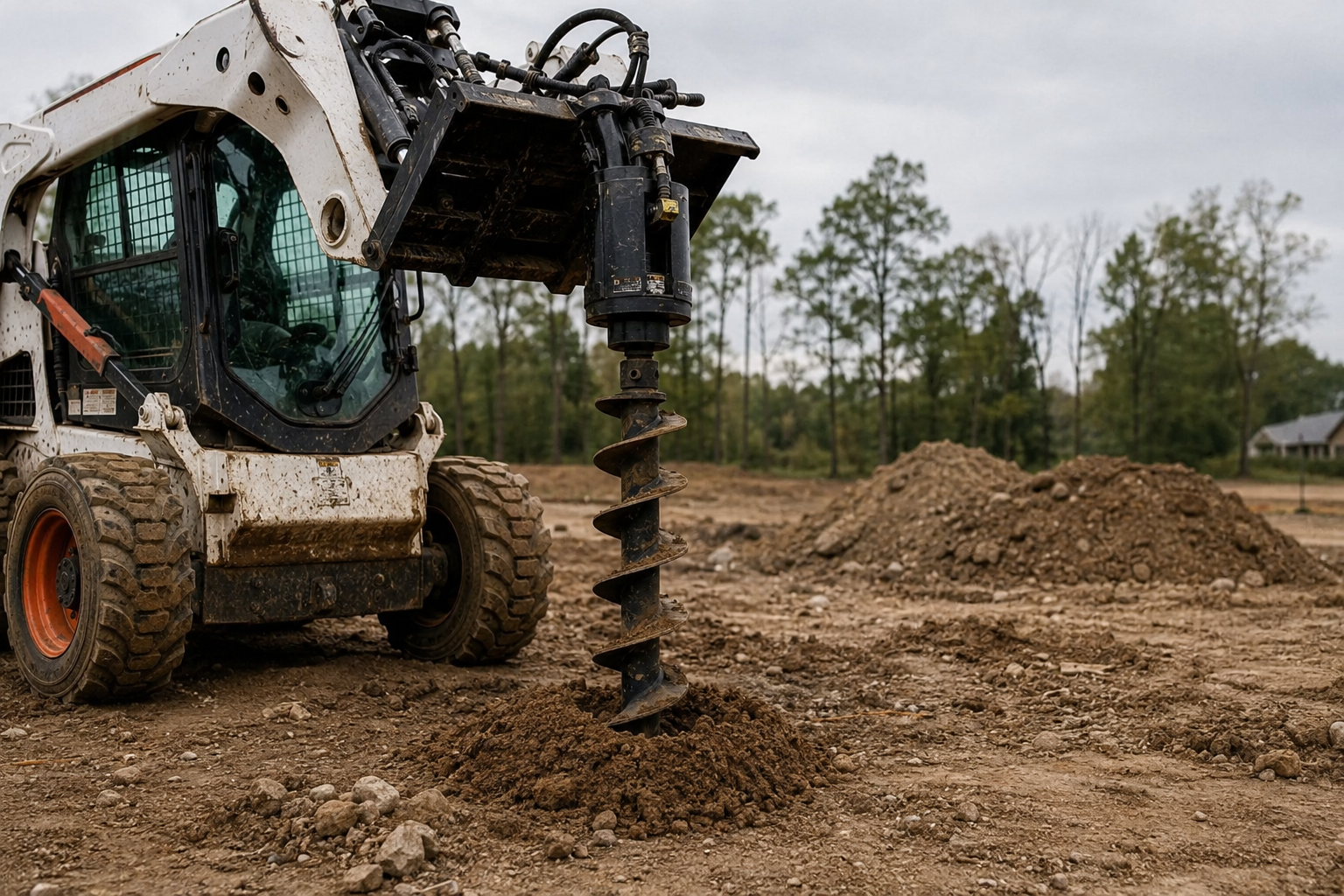
When you need to drill a lot of holes, digging them by hand stops being practical pretty quickly. Fence posts, signs, landscaping projects, utility work, farm improvements — the hole itself might be simple, but doing 30, 50, or 100 of them is another story.
That’s where a post hole auger for excavator starts making sense. A mini excavator gives the auger reach, hydraulic power, and positioning control that a handheld or basic post-hole setup just can’t match. But there’s one question operators usually want answered first: how deep can it actually drill?
The short answer is, it depends. Auger diameter, bit design, soil conditions, hydraulic performance, machine size, and even how you position the excavator all play a part.
So, How Deep Can a Mini Excavator Auger Drill?
There isn’t one universal depth.
A typical mini excavator auger can often drill several feet into the ground, with the exact working depth depending on the auger bit and attachment configuration. Standard applications commonly involve holes around 2 to 4 feet deep, while specialized setups can go deeper when conditions and equipment allow it.
But don’t look at the maximum advertised depth and assume you’ll hit that number on every job.
That’s not how drilling works.
A long bit doesn’t automatically mean better drilling. You need enough hydraulic power and torque to keep the bit turning once the soil gets harder. If you run out of power halfway down, that extra length isn’t doing much for you.
What Determines Drilling Depth?
Depth is really a combination of several things.
Auger Bit Length
This one is obvious, but it still gets overlooked.
If the bit physically isn’t long enough, you’re not drilling a deeper hole. Longer auger bits are available for applications that require additional depth, but they also change how the attachment handles.
The deeper you go, the more important machine positioning becomes.
Auger Diameter
A wider hole takes more work.
A small-diameter bit generally requires less resistance to turn than a larger one. Once you increase diameter, you’re asking the hydraulic system to handle more material.
That doesn’t mean you should always choose the smallest bit possible. The hole needs to match the post or application.
For fencing, landscaping, signs, and agricultural projects, choose the diameter based on what you actually need — not simply what the machine can spin.
Soil Conditions Can Change Everything
This is probably the biggest variable.
Soft soil? Pretty easy.
Clay? Different story.
Rocky ground? Now you’re working.
Hard-packed soil, roots, gravel, and rock can dramatically slow drilling speed and reduce the effective depth you can achieve in one pass.
A mini excavator may have plenty of hydraulic power, but if the auger keeps hitting large rocks, you’re going to fight the ground regardless.
That’s why experienced operators don’t judge an auger purely by its maximum depth specification.
They look at the entire job.
Hydraulic Flow and Torque Matter
An auger is only as useful as the hydraulic system driving it.
The excavator needs to provide the flow and pressure required by the auger motor. If the hydraulic setup doesn’t match, performance can suffer.
Too little flow can reduce rotational speed.
Poor pressure or insufficient torque can make it difficult to work through hard material.
And pushing a mismatched setup harder isn’t a solution. It can create unnecessary heat and stress on the hydraulic system.
Before buying any mini excavator attachment, check the machine’s auxiliary hydraulic specifications against the attachment requirements.
Simple step. Saves headaches later.
The Excavator Gives You More Than Just Drilling Power
One major advantage of using an excavator-mounted auger is positioning.
You’re not limited to drilling straight down from the machine’s center.
The boom and arm let you reach over trenches, slopes, landscaping areas, and awkward sections of a property. That flexibility is a big reason contractors use a mini excavator for post-hole work.
You can reposition the machine without driving directly over the area you’re working on.
That can be especially useful on soft ground or finished landscaping where you don’t want to tear everything up with the tracks.
Can You Drill Deeper in Multiple Passes?
Yes, depending on the attachment and application.
Sometimes the bit needs to be raised periodically to clear material from the hole. This is especially important when drilling deeper holes or working in sticky soil.
The operator drills down, backs the auger out, clears the spoil, and continues.
Trying to force the auger deeper without clearing material can make the job slower and put unnecessary load on the attachment.
It’s not a race.
A controlled drilling process usually gets better results.
What Happens When You Hit Rock or Heavy Roots?
This is where operators need to pay attention.
A standard earth auger isn’t designed to chew through every type of rock. Some soil conditions may require a different bit or specialized drilling equipment.
The same goes for large roots.
If the auger suddenly stops, don’t just keep hammering the hydraulics.
Stop. Check what you hit. Figure out whether you need a different bit or another method of breaking the obstruction.
That little bit of patience can save a bent component or damaged hydraulic motor.
How Deep Should Your Hole Actually Be?
This depends entirely on the application.
Fence posts may require different depths than signs, landscaping installations, or structural applications. Local building requirements and engineering specifications can also affect the required depth.
So don’t start with, “How deep can my auger go?”
Start with:
“How deep does this job require?”
Then choose the attachment and bit that can comfortably handle that requirement.
That’s a much better way to buy equipment.
Why Mini Excavators Work Well for Post-Hole Drilling
A mini excavator is already useful for digging, trenching, grading, and landscaping work. Adding an auger turns it into a more versatile drilling machine.
That makes sense for contractors who want one machine capable of handling several parts of a project.
You can drill your holes, switch attachments, and move into another phase of the job without bringing in another piece of equipment.
That versatility is one of the biggest advantages of a mini excavator attachment.
And for smaller crews, it can make a real difference to the schedule.
FAQ: Mini Excavator Post Hole Augers
How deep can a post hole auger on a mini excavator drill?
Most standard applications fall in the range of a few feet, but actual depth depends on the auger bit length, diameter, soil conditions, hydraulic power, and machine setup. Specialized auger configurations can reach deeper.
Can a mini excavator auger drill through rock?
A standard earth auger is generally designed for soil rather than heavy rock. Rocky ground may require a specialized bit or different drilling method.
What size auger should I use?
Choose the diameter based on the post or hole requirement. Larger holes require more torque and generally place greater demands on the excavator and auger system.
Does hydraulic flow affect auger performance?
Yes. Hydraulic flow and pressure directly affect motor performance, rotational speed, and available torque. Always match the auger to the excavator’s hydraulic specifications.
Is an excavator auger better than a handheld post-hole digger?
For larger projects, usually yes. A mini excavator provides more power, reach, and positioning control, especially when many holes need to be drilled.
Final Thoughts
So, how deep can a mini excavator auger actually go?
There’s no single number that applies to every machine and every job. A few feet is common for many post-hole applications, while deeper drilling is possible with the right auger, extension, machine, and ground conditions.
The important thing is not chasing the deepest hole possible. It’s matching the post hole auger for excavator to the actual work you need to complete.
Check your soil. Check the required hole depth. Verify hydraulic flow and torque. Pick the right diameter.
Then let the attachment do its job.
A properly matched mini excavator attachment can turn a slow, labor-heavy drilling job into a much more manageable part of the project. And that’s really what good equipment is supposed to do — make the work easier without creating another problem.