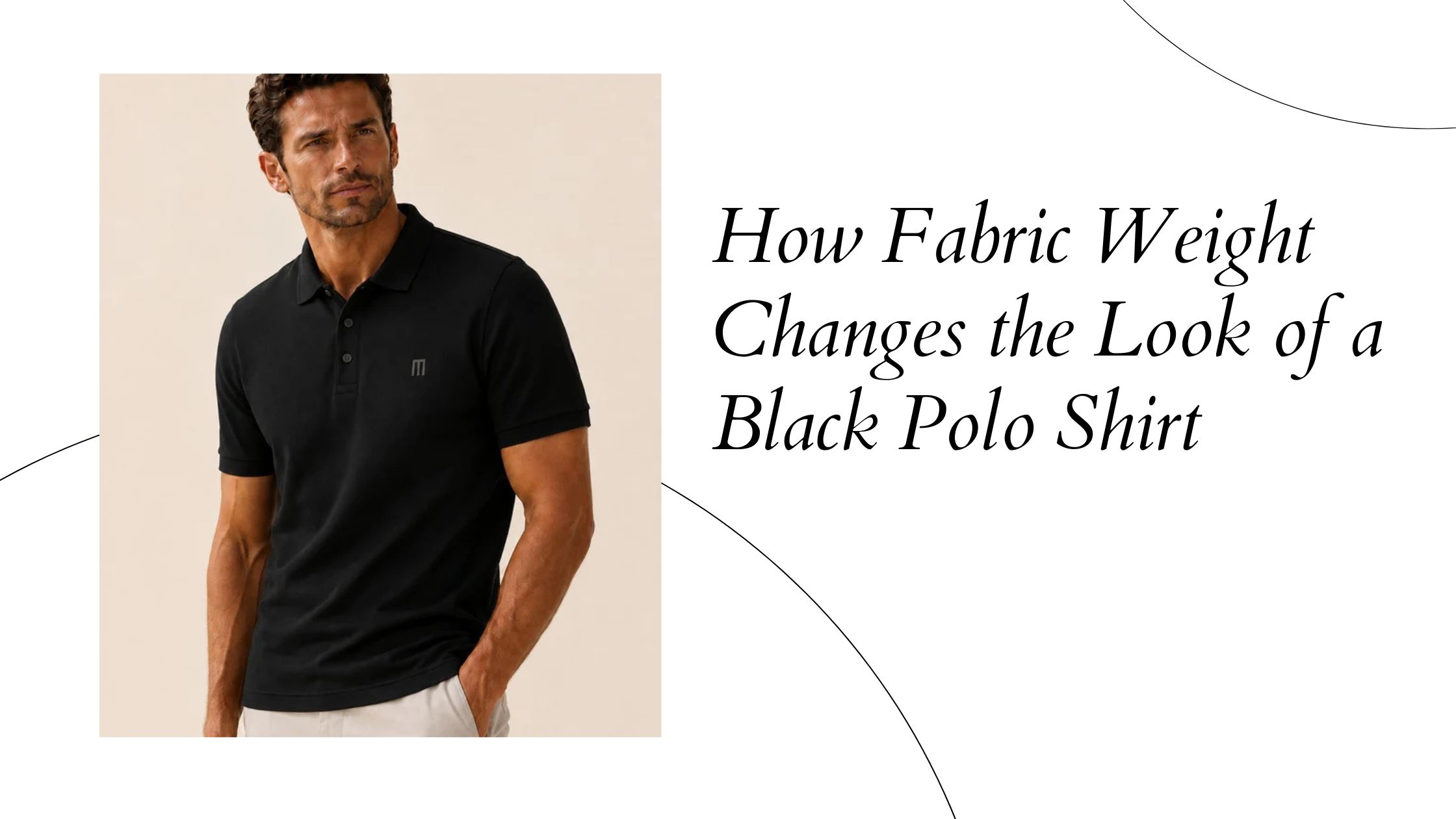
Fabric weight is the main reason two black polos can look so different even when the color is the same. It’s measured in GSM, or grams per square meter, and it decides whether a polo hangs soft and casual or holds its shape like a sharp, structured piece. A lighter fabric moves with the body. A heavier one stands on its own. For any black polo shirt men pick for daily wear, this one detail changes the whole outcome.
What Is Fabric Weight (GSM) in a Polo Shirt?
GSM is a simple measurement. It tells you how much a square meter of fabric weighs, and that weight tells you how thick or dense the knit is.
A low GSM number means a thin, light fabric. A high GSM number means a thick, dense one. Most polo shirts fall somewhere between 160 GSM and 240 GSM, and that range covers everything from beach wear to business casual pieces.
How Does Fabric Weight Change the Look of a Black Polo Shirt?
Weight changes drape, shape, and how the black color reads in light. A thin polo clings and looks relaxed. A heavy one holds structure and looks sharper. Here’s how the three main ranges compare.
Fabric Weight Comparison at a Glance
| Fabric Weight (GSM) | Drape & Structure | Look | Best For |
| Lightweight (under 180 GSM) | Soft, clings to the body | Relaxed, casual | Hot days, beach trips |
| Midweight (180 to 210 GSM) | Balanced, holds shape without stiffness | Clean, sharp, versatile | Daily wear, smart casual, layering |
| Heavyweight (220 GSM and up) | Rigid, holds its own shape | Structured, formal | Business casual, cooler months |
Most men who want one polo that works for several settings tend to land in the midweight range. It’s the middle ground between looking too laid back and looking too stiff.
Why Do Collar Structure and Color Depth Depend on Fabric Weight?
A polo’s collar and its color depth both come down to how dense the fabric is. Thin fabric loses shape fast. Thick fabric holds it.
Collar shape is the first thing to break down on a light polo. Over time, a thin collar starts to curl or fold instead of sitting flat. A denser fabric keeps its structure through more washes and more wear, so the collar still looks crisp under a jacket or on its own.
Black also reacts to fabric density in a way other colors don’t. Thin cotton can look slightly faded or washed out in direct sun. A denser weave reflects light more evenly, so the black stays deep and doesn’t look thin or worn.
How Should You Style a Black Polo Shirt by Fabric Weight?
Each weight works best with a different kind of outfit. Matching the fabric to the setting makes the whole look feel intentional instead of random.
- Lightweight (under 180 GSM): Pair it with linen shorts or relaxed denim. Leave it unbuttoned for an easy, warm weather look.
- Midweight (180 to 210 GSM): Tuck it into chinos or dark trousers, or wear it untucked. It layers well under a blazer or cardigan without adding bulk.
- Heavyweight (220 GSM and up): Wear it untucked with tailored trousers or dark denim. It holds its own shape, so it works almost like a light outer layer.
What Fabric Weight Works Best for a Black Polo Shirt?
For most men, something close to 200 GSM hits the right balance. It’s heavy enough to hold its shape and light enough to stay breathable.
Go too light, and the polo loses its structure fast. Go too heavy, and it can feel stiff or too warm for daily wear. A midweight knit sits right between the two, which is why it’s the range most brands lean on for everyday pieces.
How Many Black Polo Shirts Should Be in a Rotation?
One weight rarely covers every season or every occasion. A light polo for summer, a midweight one for daily wear, and a heavier one for cooler months cover most of the year without gaps.
Buying these one at a time adds up fast, and matching shades across separate orders isn’t always easy either. This is where a polo shirt value pack tends to make more sense. It’s a simpler way to build out a few weights and colors in one order instead of shopping piece by piece.
Finding the Right Weight for Your Next Black Polo
Fabric weight isn’t just a technical detail. It decides how a black polo fits, moves, and holds up over time, and picking the right one depends on where and when it’ll actually get worn. Brands like MOMIFA are among the options currently offering midweight black polos built around that everyday balance, alongside packs that make it easier to cover more than one occasion at once.
FAQs
What GSM is best for a black polo shirt?
Around 200 GSM works for most people. It holds its shape without feeling heavy or stiff.
Does fabric weight affect how black fades?
Yes. Thinner fabric can look washed out in sunlight, while denser fabric keeps the black looking deep and even.
Is a heavier or lighter polo more formal?
Heavier fabric usually looks more formal because it holds a cleaner, more structured shape.
Can one polo work for both summer and winter?
Not really. A single weight tends to feel wrong in at least one season, which is why most men keep a couple of different weights on hand.