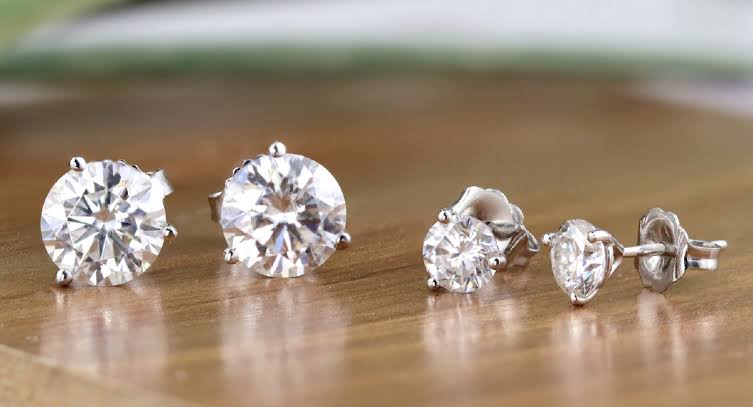
Anyone shopping for lab grown diamond earrings will meet several names for the same product. Grown, created, cultivated, and man-made all describe a laboratory diamond, and the material itself is diamond rather than a substitute. That distinction matters first because it separates these stones from simulants such as cubic zirconia and moissanite, which are different materials altogether.
What the Terms Actually Mean
The Federal Trade Commission (FTC) sets out how these stones should be described in its Jewelry Guides. The recommended terms are laboratory-grown, laboratory-created, and manufacturer-created, and sellers are expected to clearly disclose that a stone was not mined. The word cultured is permitted only alongside one of those qualifiers. Synthetic was removed from the recommended list in a 2018 revision, on the basis that it tends to confuse shoppers, although it is not prohibited.
Underneath the vocabulary, the definition is specific. A laboratory diamond has essentially the same chemical composition, crystal structure, and optical properties as a mined stone. It begins from a diamond seed and forms under heat and pressure that replicate the conditions underground, over weeks rather than a geological age. Telling the two apart requires specialized laboratory equipment, which is why both are graded by the same laboratories on the same scales for cut, color, clarity, and carat weight.
Why Matching Matters More in Earrings
A ring has a single stone carrying the design. Earrings have two, sitting a few inches apart on either side of the face, and any difference between them is visible straight away.
A well-made pair is selected together for shape, color, and clarity, then each stone is set individually. It is worth asking whether a pair was matched in this way or simply assembled from two stones of a similar weight, because the two approaches produce noticeably different results. Length to width ratio deserves attention as well, particularly with ovals and pears, where a small variation makes one stone look rounder than its partner.
Choosing a Setting
The setting determines how the pair sits against the ear and how much daily wear it accommodates. Four styles cover most of what you will find.
- Four prong. The most familiar option. It lifts the stone so light enters from the sides, and sits a little taller on the lobe.
- Three prong. Fewer metal points cross the surface of the stone, which gives a more open look at a similar height.
- Martini. The prongs taper into a low cone, so the stone sits close to the ear. A practical choice under headphones or against a pillow.
- Bezel. Metal wraps the outer edge of each stone completely, giving the most secure and the flattest setting.
If the earrings will be worn every day and slept in, the martini and bezel styles suit that pattern well. If they come out mainly for occasions, prong settings allow more light into the stone and give a taller, more traditional profile.
What Affects the Price
Two pairs of the same total carat weight can differ considerably in price, and three factors account for most of the gap.
Cut quality is the largest. A well-proportioned stone returns light evenly, while a poorly proportioned one lets it escape through the base. Matching is the second, since selecting two stones that genuinely agree takes more inventory and more time than pairing two of similar weight. Setting labor is the third, because seating each stone by hand under magnification is slower work than a standardized mount. When you compare lab created diamond earrings between sellers, those three things explain most of the difference.
What to Check Before You Buy
You can ask your jeweler for the grading report covering each stone, or the pair if they are sold together, and check the measurements in millimeters as well as the carat weight, since the measurements tell you how large the stones will look on the ear.
Confirm which backs are fitted, because screw backs and locking backs behave differently from friction backs. Ask about servicing too. Prongs loosen, and posts wear with constant use, and both are typically routine repairs, so it is useful to know in advance what a jeweler covers and for how long. An annual prong check is a minor maintenance that keeps settings secure over the years.
Putting It Together
Cut quality and careful matching will do more for a pair of earrings than carat weight alone. Choose the setting that suits how you actually wear them, read the report on both stones, and confirm what happens if something needs attention later. Those four checks cover the decisions that matter, and the rest comes down to what you like when you see it on.
For More Articles Visit: https://regic.net/