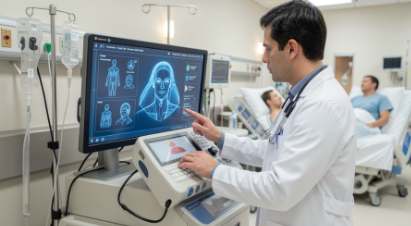
Healthcare has traditionally relied on broad clinical guidelines, population-level research and a doctor’s professional judgement to determine the most appropriate treatment for an individual. While this approach has delivered major advances in medicine, it does not always account for the biological, genetic, environmental and lifestyle differences that can influence how people develop disease or respond to treatment. Personalised healthcare seeks to address this gap by making medical decisions more specific to the individual.
The growing field of Artificial Intelligence in Healthcare is adding another layer to this shift. Modern computational systems can examine large and complex datasets much faster than traditional analytical methods, helping researchers and clinicians identify patterns that may otherwise be difficult to detect. This does not mean that algorithms can replace medical professionals. Rather, their potential lies in helping healthcare teams interpret information, estimate risks, and consider treatment options alongside clinical expertise.
Understanding the Concept of Personalised Healthcare
Personalized healthcare is a concept that prioritizes developing a medical strategy for each particular individual and not just following the same treatment pattern for every patient with similar conditions. Although they may seem similar, two people with the same diagnosis can respond differently to treatment.
Therefore, finding the most appropriate and beneficial ftreatment or each patient is one of the main aims of personalized healthcare.
One of the examples of personalized healthcare is the further development of cancer treatment. It has been noticed that the effectiveness of treatment can vary significantly depending on the genetic features of the tumor. Personalized healthcare helps to find out such peculiarities and accordingly choose the most effective methods. Another example is the prescription of drugs. Some medications are beneficial for patients with certain conditions; however, for others, they may turn out to be ineffective or even harmful. In particular cases, personalized healthcare can help to avoid adverse effects.
Personalized healthcare allows for considering multiple factors and making the right decision for the patient. To do this, it is necessary to use available technologies and collect relevant information for each case: electronic medical records, laboratory test results, radiology data, genetic composition, data from devices, and vital signs.
How Intelligent Technologies Are Supporting Treatment Decisions
Modern healthcare produces a vast amount of data, the analysis of which is complicated by the complexity of the information itself. Sophisticated analytic systems can help organize and interpret this information, providing clinicians with valuable insights.
Such systems can be used to address various aspects of personalized healthcare, from detecting risks and supporting diagnosis to providing clinicians with potential treatment options. These systems can serve as an additional source of information for medical practitioners.
Advancements in Medical Diagnosis and Data Analysis
Diagnosis is one of the areas in which technologically driven approaches can make a difference in healthcare. Clinicians must review X-rays, laboratory results, and patient history. Advanced technology can help analyze this information more thoroughly and highlight any critical observations that have to be considered.
The growth of the AI in Medical Diagnostics Market is attributed to the rising adoption of AI-enabled diagnostic technologies in various applications like medical imaging, pathology, and disease diagnosis. These include factors such as growing healthcare data analytics and computational power, along with the evolving demand for effective treatment. However, the successful implementation and adoption of these systems depend on improving precision and preserving data security, as well asd the role of healthcare professionals in the decision-making process.
Improving Early Detection and Risk Prediction
One of the progressive benefits of modern healthcare technologies is their capacity to identify populations at risk. By analysing medical histories and patterns, they may be able to determine patients who are at higher risk of developing specific diseases and conditions.
This feature is especially useful for people with chronic illnesses like diabetes, cardiovascular diseases, and kidney problems, as early treatment is often critical for such cases. With that being said, medical professionals may utilise these findings to suggest appropriate actions to patients and improve their treatment outcomes.
Similarly, algorithms in predictive healthcare can help clinicians establish what populations to pay closer attention to to improve health outcomes. Nevertheless, it is paramount to remember that such insights are only one part of the equation, and there are various other factors that should be considered before making medical decisions.
Personalised Medication and Treatment Approaches
Choosing the right medication can sometimes be challenging, particularly in the case of complicated diseases or treatment-resistant conditions. Personalised healthcare aims to bridge the gap between medical intervention and individual needs through the consideration of patients’ specific features in the decision-making process.
This approach allows for a better understanding of the most appropriate therapeutic strategy by taking into account one’s medical history, genetic profile, and treatment response patterns. Such an individualised approach is especially prominent in oncology, where treatment options are often determined by particular cancer biomarkers.
Nevertheless, it is important to note that despite promising advances, personalised healthcare should not replace medical expertise, critical analysis, and years of professional experience in choosing the most optimal patient-centred care strategy.
The Role of Genetics in Precision Medicine
Genetic information has become a valuable tool for modern personalized healthcare. Recent advances in genetic testing technologies enable the medical field to identify and understand genetic factors contributing to diseases and treatment inefficiency.
With the addition of powerful data analysis, genetic data may be used to develop precision medicine treatments individualized to patients with similar genetic profiles. Oncological diseases are considered the most successful example of personalized healthcare,e as several FDA-approved cancer medications have been found to treat cancerous tumors with specific genetic mutations.
Nevertheless, ethical and privacy concerns related to genetic information are major issues that must be addressed in genetic research and personalized medicine.
Wearable Technology and Continuous Health Monitoring
The development of wearable devices allows for a different approach to health care. By allowing individuals to monitor their own activity level, heart rate, and other health factors, wearables open up the possibility of tracking a person’s health outside the doctor’s office.
The constant stream of information enables doctors to track a patient’s health in greater detail than in years past. For patients struggling with long-term illnesses, the ability to constantly monitor their health means that doctors are more likely to take action at the first sign of concern.
At the same time, individuals should be aware that while wearables can collect large amounts of data, this information must be put into context to have any value. The ability to use these devices in tandem with professional health care, and not as a replacement for it, is what gives them value. Data collected by wearables cannot be used effectively outside of a clinical setting.
Benefits of Data-Driven Personalised Healthcare
There are numerous advantages to integrating new technologies into the healthcare system. Using relevant health data can facilitate better diagnosis, prevention, and treatment of diseases by medical workers.
Personalised healthcare can enable them to detect health issues early, comprehend individual treatment responses, and manage diseases in a more efficient manner. Further, it can aid medical institutions in storing information systematically and save time for more critical tasks.
However, it would be wrong to believe that technology can solve all existing problems with the healthcare system. Notwithstanding the many advantages of using new technologies, relevant and reliable information is crucial to achieving positive results. At the same time, medical professionals should actively participate in the process to ensure successful diagnoses and treatment.
Challenges and Ethical Considerations
While advanced technologies may provide new opportunities, they also raise ethical issues such as privacy, fairness, and accountability. Biomedical technologies require high levels of security to ensure that patients’ data is not misused or compromised.
Another key ethical challenge raised by emerging technologies is bias. The data used to train algorithms should be diverse and representative of all populations. Researchers and healthcare professionals must acknowledge potential biases to ensure technologies function effectively for all patients.
Healthcare workers need transparency when making medical decisions based on technology recommendations. Understanding how an algorithm arrives at its conclusions allows appropriate interpretation of its results.
Changing Responsibilities of Healthcare Professionals
As healthcare technology develops, the role of medical professionals also evolves. Doctors, nurses, and healthcare teams will be more reliant on advanced analytical technologies to interpret information and assist in providing treatments.
Yet at the same time, technology will not replace the need for human elements of patient care, such as understanding patients’ concerns, discussing options, and taking into consideration each person’s particular needs.
Thus, a balanced combination of cutting-edge technologies and medical expertise will be paramount in order to develop the most effective and individualized treatment options.
Future Outlook of Personalised Treatment
The future of personalized healthcare will be determined by the convergence of medical research, technology, and personal health data. The development of the healthcare sector is expected to lead to the emergence of sophisticated approaches that emphasize prevention, early intervention, and tailored treatment plans.
The future of personalized healthcare will be driven by the integration of genomics, lifestyle factors, environmental influences, and real-time health data to create a comprehensive understanding of each patient’s health status.
This will enable clinicians to deliver increasingly precise and effective interventions. Moreover, the future of personalized healthcare will depend on ethical considerations, regulatory frameworks, and collaborative efforts among healthcare professionals, technologists, and patients to ensure responsible innovation and optimal patient care.
Conclusion
The introduction of innovative technologies into personalized healthcare transforms the paradigm of medical information reception and utilization. Through the optimization of analytical processes, enhanced diagnostic accuracy, and the development of appropriate therapeutic interventions, emerging technologies can make healthcare more efficient and better tailored to each patient’s needs.
However, the most comprehensive solution will always combine technological assistance with human efforts. Therefore, ensuring privacy, equality, and putting patients’ needs first will be the key priorities in personalized healthcare in the future.