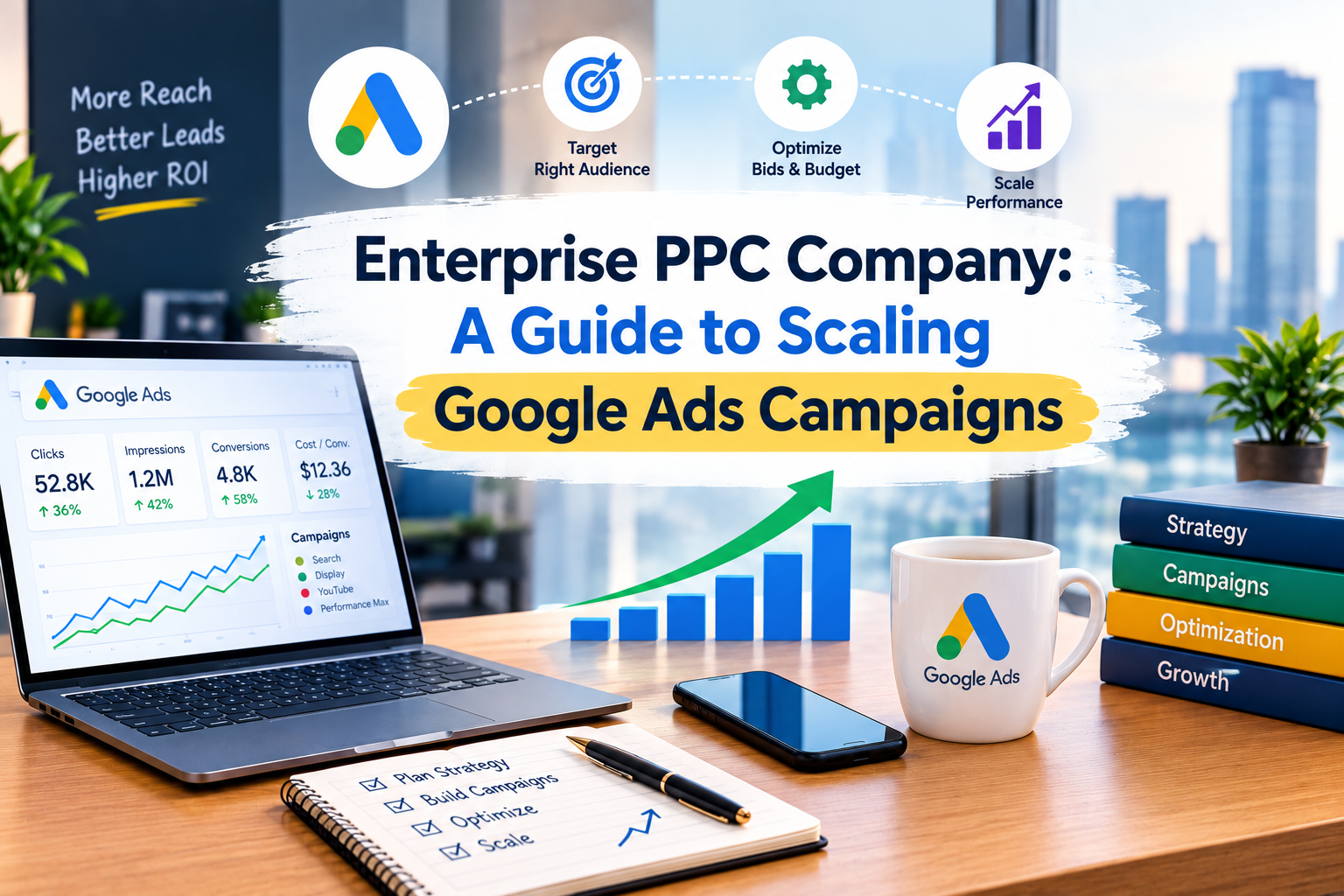
More clicks from Google Ads do not usually happen just by spending more. For large teams, growth needs a real game plan. That plan has to handle many details, such as hiring the right talent, watching costs closely, and showing clear proof of what is working.
When a business enters new areas, things ramp up quickly. Keyword sets can expand fast. There may be several campaigns to run at the same time. Teams might also need to aim at different audiences. On top of that, conversion tracking becomes more complex and harder to keep neat.
A veteran enterprise PPC team can reduce the stress here. They can support early planning, keep campaigns improving over time, and share updates that show results month to month. If the setup is solid, scaling can move forward without blowing budgets or missing key marketing targets.
This piece covers practical steps for enterprise companies. It focuses on scaling Google Ads, improving ad results, and building a PPC setup that holds up over time.
Understanding Enterprise PPC Management
Enterprise PPC management means planning, setting up, watching, and improving paid ads for big companies. In these accounts, the workload is much larger than in small setups. There can be thousands of keywords, several product lines, ads split by region, and more than one conversion goal.
With that scale, a clear plan is needed. The ads have to tie back to the company goals. Teams also have to line up how budgets are spent. They must set who will see the ads. They choose bidding methods, check landing pages, and keep an eye on conversion tracking across all campaigns.
From what I know, good results come from using data and then making changes over time. The goal should not be only clicks or views. A company should look at whether the ads bring in strong leads. It should also track sales, new customer growth, and the overall return from ad spend.
A set process also helps. It lets teams spot campaigns that lag. It supports moving money to what works. Then it makes it easier to grow the efforts that perform well.
Why Enterprise Businesses Need a Scalable Google Ads Strategy
Big companies often compete in markets where ad prices can rise fast. What works when you start small can fade after you grow the budget or push into new regions.
One common issue is raising daily ad spend while skipping key checks. If teams do not review keyword quality, conversion rates, and how people respond, money can go to clicks that do not turn into real outcomes. You may see more visits, but not more buyers.
A well designed Google Ads plan can make growth easier while keeping profits in view. It helps a marketing team spot where expansion makes sense, try fresh ad ideas, and choose where the next spend should go.
A skilled enterprise PPC partner can build ad account setups for steady growth. They can also point out which campaigns should get more budget and which ones need changes first before scaling.
Key Strategies for Scaling Google Ads Campaigns
1. Build a Structured Campaign Architecture
A clear campaign setup helps people run big ad accounts without getting lost. In large companies, it helps to split campaigns in a few logical ways.
Many enterprises sort campaigns by what they sell. Others group by services offered, by where they do business, or by who they want to reach. Some teams also organize by business goals.
For example, if a firm sells in several countries, it can run one campaign per market. That lets the team adjust ads, spend, bidding, and the page a user lands on. Local habits can differ a lot, so this approach keeps things relevant.
It also helps to use steady campaign names. Avoid making the same campaign more than needed. With a tidy setup, reporting feels easier. Teams can spot patterns in results across teams and departments.
2. Use Smart Bidding With Reliable Conversion Data
Google Ads includes automated bid options. These tools use signals like device type, location, and how people act on your site to set bids in each auction.
Larger advertisers can choose settings such as Target CPA or Target ROAS. The goal is to steer bids toward a clear result. This only works well when conversion tracking is set up correctly. You also need enough conversion events for the system to learn.
Before you expand budgets, check that your conversion actions are correct. Look for duplicate tags or duplicate counting and fix them. Then focus on the outcomes that matter most. For a B2B team, that might mean valuing sales leads more than a simple contact form fill.
Many studies point out that automation is now part of most PPC work. Still, someone on your team should review the results. They should confirm targets make sense and tweak the plan when performance shifts.
3. Expand Keyword Targeting Strategically
Keyword expansion can help large companies find new audiences and show up more often in search results. Still, if you just add keywords and skip intent review, you may pull in visitors who do not match your goal.
Marketers should look closely at what people are actually searching for. From there, they can group themes that matter, then add long-tail phrases that fit those needs. Negative keywords are also useful. They help keep ads out of searches that do not belong to your offering.
Ongoing keyword checks can uncover fresh chances. At the same time, they can stop waste in ad spend. Teams should judge results by conversion quality and real outcomes. They can also track cost per acquisition and overall business value, not only by how much traffic the ad brings in.
4. Optimize Landing Pages for Conversions
Getting more visitors to a site does not always mean the campaign will work better. For large companies, the landing page still has to do its job. It should feel on target, easy to follow, and genuinely helpful.
A landing page should line up with what the ad says. If the ad promises one thing, the page should deliver that exact message. Key benefits should be visible right away. The service details should be easy to read. Every page also needs a clear next step, and the form should not feel like a chore.
Teams should try different versions of the page. That includes the layout, the headline, the call to action, and how long the form is. Small lifts in conversion rate can matter a lot, since these campaigns often bring in large volumes of traffic.
An enterprise PPC agency can run these tests with the campaign results. Then they can point to the landing page updates that actually improve conversion performance.
The Role of Enterprise PPC Services in Business Growth
Large organizations often need more help just to keep ads running across many campaigns, platforms, and locations. With enterprise PPC help, the team can cover both the early planning and the ongoing daily work.
This kind of service can include a campaign plan, an audit of a Google Ads account, and work on keyword research. It also covers audience targeting and updates to conversion tracking. Bids get tuned as data comes in. Remarketing brings back people who visited before. Throughout the month, teams share performance notes so progress is visible.
Some clients also request budget forecasts, checks on competitors, and fixes for product feeds. Others need support for campaigns that run across more than one channel. When this is handled well, the marketing team can follow one consistent ad approach as the company grows.
If you are choosing an enterprise PPC partner, review what they have done for big ad accounts. Look at how they show results, how they run optimizations, and how they keep in touch. A strong provider should fit your company’s targets and build ad plans that connect to outcomes you can track.
Enterprise AdWords Management: Budget Control and Performance Tracking
Managing AdWords in an enterprise setup means you have to split the money up the right way and keep checking how things perform. Big ad accounts can run through large budgets across many campaigns, so teams need a simple way to watch costs and compare them to outcomes.
Marketing groups should set budgets for each campaign. Then they should watch how spending changes over time and see if results match what the business expects. They also need to spot campaigns that use a lot of budget but do not bring useful conversions.
Useful performance metrics include:
- Cost per acquisition (CPA)
- Return on ad spend (ROAS)
- Conversion rate
- Qualified leads and sales
- Customer acquisition cost (CAC)
- Revenue generated from paid campaigns
When I reviewed the material, it seemed clear that companies should not judge a campaign by just one number. A low CPA can come with weak leads. A higher CPA can still lead to better sales or stronger customer value later on.
Using several measures in reports gives managers a clearer view. It also shows how ad spending links to real business outcomes.
How to Choose the Right Enterprise PPC Agency
Choosing a PPC partner can feel like a lot. Paid ads can grow fast, but only if the work is done right. Do not focus only on who can launch campaigns. You also need a group that can plan ahead, share progress on a regular schedule, and show how performance will get better.
First, ask about their past work with tough Google Ads accounts. You also want to know if they can handle higher budgets when your spend grows. Confirm they understand your kind of business. After that, ask how they measure results, how they track conversions, and how they find new ways to improve.
Then request case studies. Ask for fresh examples and recent reporting. Review what happened in past campaigns and what was learned. You want to see how they react when things go off track. You also want to know what they count as a win.
A solid partner should explain their ideas in simple language. They should connect ad work to your business goals. Set up regular meetings and expect honest updates. That way, your team can follow what is working and what needs fixing.
Common Challenges When Scaling Enterprise PPC Campaigns
When an enterprise tries to grow its ad spend, problems can show up fast. Some teams see CPC costs climb. Others notice conversion rates drop. Tracking can also get messy, especially when ads run in many countries. Coordinating the work across markets adds another layer of friction.
Data can become shaky too. One group may count a conversion one way, while another group uses a different definition. Teams sometimes rely on different reporting tools. If the numbers are not aligned, it is hard to judge which campaigns truly perform better.
A safer way is to set firm rules for campaign work. Standard reporting matters, so everyone looks at the same fields. Regular account checks also help catch gaps. Big edits should be tested first, before they roll out to every part of the account.
In general, scale in stages. Watch results day by day and week by week. Then change the plan only when the data is clear. With this rhythm, issues surface sooner, and wasteful spend is less likely.
Conclusion
Getting Google Ads to perform well in large accounts is not a one-step task. It needs a clear plan. It needs reports that match what is really happening. It needs changes that are made each week, not whenever someone remembers. It also needs budget control, so spend stays within limits.
In bigger companies, that often means creating multiple campaigns at once. It also means checking that conversion tracking is still accurate. You have to make sure the numbers reflect real customer actions. Another part is time spent on the work that moves revenue, not on tasks that feel busy but do not help.
After the campaign structure is set, the rest usually becomes easier. Your keyword set should match the offer you are selling. Bids should be adjusted with intention, not left to default settings. The landing page should support the exact action you want users to take. When these pieces line up, performance tends to last rather than spike and fade.
Enterprise PPC can also help reveal where more demand may be present. Even then, you still need close oversight. Each campaign has to be monitored so results stay clear and manageable. Smart automation can support the process, but human oversight remains important to evaluate results and make informed decisions. A Fort Lauderdale website company can also help improve the website experience, while data-driven adjustments keep campaigns aligned with changing business needs.
Whether the work is done by an internal team or an outside agency, the goal should stay the same. Aim for results you can measure. Keep budgets planned and not reactive. Build toward growth that comes steadily. With a careful approach, teams can scale Google Ads while keeping business goals in focus.