
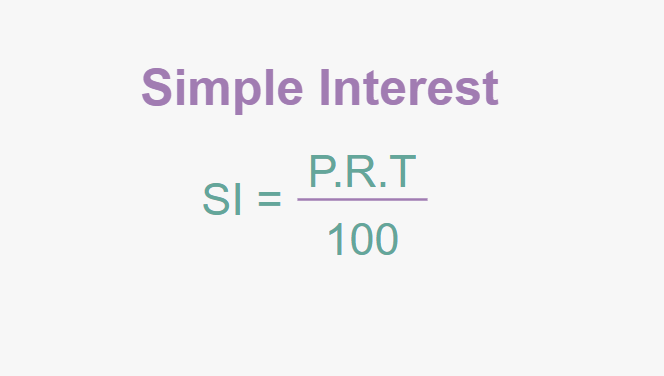
Simple interest is a fundamental concept used in finance and economics to calculate the interest accrued on a principal amount over a specified period. Understanding simple interest is crucial, especially when dealing with loans, savings, and investments. In this article, we’ll explore simple interest in-depth, provide simple examples, and discuss its applicability in various financial scenarios, such as a personal loan for home renovations.
What is Simple Interest?
Simple interest is the calculation of interest where the interest amount is based solely on the original principal throughout the entire investment or loan period. This means that the interest does not accumulate on previously earned interest, making the calculation straightforward.
The Simple Interest Formula
The formula for calculating simple interest (SI) is as follows:
[ SI = P r t ]
Where: – ( SI ) = Simple Interest – ( P ) = Principal amount (the initial sum of money) – ( r ) = Rate of interest (in decimal form) – ( t ) = Time the money is borrowed or invested for (in years)
Example of Simple Interest Calculation
Let’s consider an example to elucidate the concept further. Suppose you invest 1,000 at an annual interest rate of 5% for 3 years.
Using the formula:
- Principal (P) = 1,000
- Rate (r) = 5/100 = 0.05
- Time (t) = 3 years
Now, plug the values into the formula:
[ SI = 1000 = 150 ]
In this scenario, the simple interest earned over 3 years would be 150. Thus, the total amount after 3 years would be:
[ Total Amount = Principal + Simple Interest = 1000 + 150 = 1150 ]
Key Characteristics of Simple Interest
Understanding the characteristics of simple interest helps distinguish it from compound interest. Here are some important points to consider:
- Linear Growth: Simple interest grows linearly over time. The interest earned remains constant every year, as it does not compound.
- Predictability: With a straightforward calculation, one can easily predict the future value of investments or loans.
- Short-term Applications: Simple interest is commonly used for loans with short terms, such as personal loans for home renovations or car loans, whereas compound interest is often used for longer-term investments like savings accounts and bonds.
Practical Applications of Simple Interest
Personal Loans for Home Renovations
One of the most common applications of simple interest is in personal loans for home renovations. When homeowners decide to make improvements to their property, they often seek financing through a personal loan for home renovations. These loans typically have a fixed interest rate and a repayment term that allows borrowers to pay off the loan efficiently.
For example, if you borrow 20,000 at a 6% annual interest rate for a term of 5 years, the interest calculation would look like this:
- Principal (P) = 20,000
- Rate (r) = 6/100 = 0.06
- Time (t) = 5 years
Using the simple interest formula:
[ SI = 20000 = 6000 ]
In this case, the total interest paid over 5 years will be 6,000. The total amount to be repaid would be:
[ Total Amount = Principal + Simple Interest = 20000 + 6000 = 26000 ]
Homeowners need to carefully consider this total repayment amount when planning their renovations.
Short-Term Savings
Another common use of simple interest is in short-term savings accounts. Although most banks use compound interest for savings accounts, understanding simple interest can help savers gauge the basic returns they can expect from fixed deposit accounts.
For instance, if you deposit 5,000 into a short-term account at a 4% interest rate for 2 years, the interest earned would be:
- Principal (P) = 5,000
- Rate (r) = 4/100 = 0.04
- Time (t) = 2 years
Using the simple interest formula:
[ SI = 5000 = 400 ]
The total amount after 2 years would be 5,400. This straightforward calculation allows savers to figure out how much they can expect to earn.
Pros and Cons of Simple Interest
Advantages
- Simplicity: The simple interest formula is easy to understand and calculate.
- Consistency: Since it does not compound, the interest remains the same throughout the duration of the loan or investment, making it easier to budget.
Disadvantages
- Lower Returns: Loans or investments calculated on simple interest often yield lower returns compared to those using compound interest.
- Limited Applicability: Simple interest is not suitable for long-term investments where the effects of compounding would yield higher returns.
Conclusion
Understanding simple interest is crucial for anyone dealing with personal finance, whether you’re contemplating a personal loan for home renovations or considering short-term investments. The straightforward calculation involved in determining simple interest can aid in various financial decisions, ensuring that you make informed choices.
By analyzing examples and recognizing the pros and cons, readers can better navigate their financial futures. While simple interest offers clarity and predictability, it is essential to weigh its limitations against the potential benefits of compound interest in applicable scenarios. As you move forward with your financial endeavors, keep these concepts in mind to help you achieve your financial goals effectively.