
Introduction
A flexible manufacturing system is designed to handle a range of products or operations with coordinated equipment, material flow and controls. Flexibility can help manufacturers respond to changing production mixes, but it also places demands on fixturing and workholding. Components must be located consistently, held securely and changed over efficiently as the system moves between jobs. A hydraulic clamp may be appropriate where an application requires controlled clamping force and integration with a machine or fixture circuit.
SCHUNK offers industrial clamping and workholding technologies that manufacturers can assess when designing automated production. The right solution depends on the workpiece, process forces, required cycle time and system architecture. Engineering validation remains essential because flexibility does not remove the need for stable, repeatable setups.
What Makes a Manufacturing System Flexible?
Flexibility may involve processing different part families, changing production quantities or routing workpieces through multiple stations. A flexible system can combine machine tools, automated handling, inspection and central control. Its performance depends on how well these elements coordinate, including how quickly fixtures and tools can be adapted to a new job.
Flexibility should be defined in practical terms. A plant may need to accommodate a range of component sizes, reduce changeover time or respond to short production runs. Each goal has different implications for fixture design, tooling storage, programming and operator training. Without clear requirements, a system can become complicated without delivering meaningful production benefits.
The Role of Hydraulic Clamping
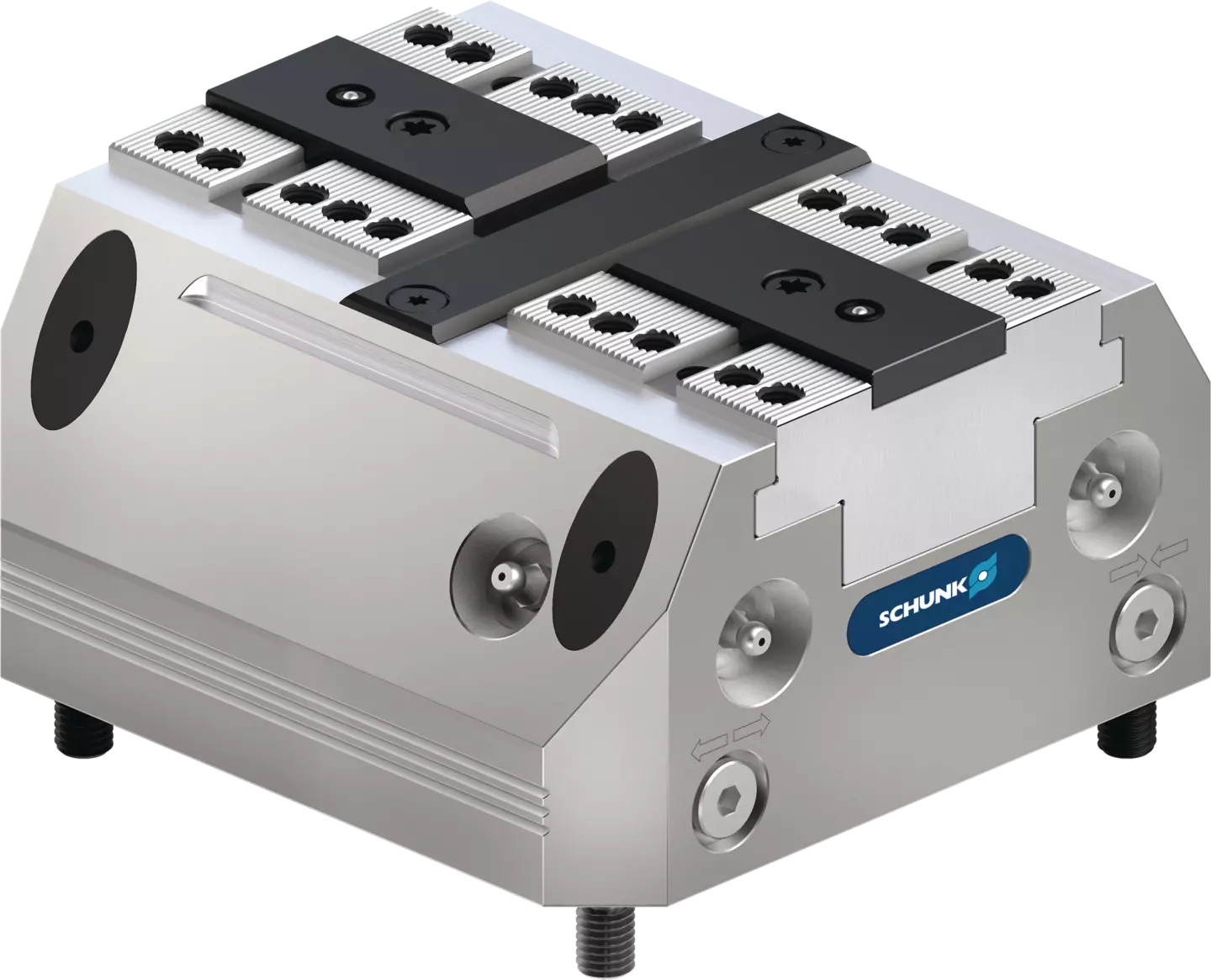
Hydraulic clamping uses pressurised fluid to actuate a clamping mechanism. It can provide substantial and controlled force in a compact arrangement, making it useful in selected machining and fixture applications. In automated cells, hydraulic clamps can be integrated with fixture circuits and control systems to support consistent clamping sequences.
The circuit must be designed for the required pressure, flow, cycle frequency and operating conditions. Seal integrity, hose routing, filtration and pressure monitoring are important. Designers should account for the consequences of pressure loss and ensure that the system reaches a safe state if a fault occurs. The selected clamp must match the fixture and the loads generated by the process.

Designing for Repeatability and Changeover
A flexible system often needs to process multiple part variants. Fixtures may therefore include replaceable locating elements, adjustable features or dedicated modules for different components. The goal is to make each setup repeatable while reducing the number of manual adjustments required between jobs.
Standardised interfaces can simplify changeover, but they do not replace verification. After a fixture or program change, the system should confirm the correct setup before machining begins. Sensors, part-presence checks and documented first-piece inspection can help reduce the risk of producing a batch with incorrect positioning. Changeover procedures should also state how fixtures are cleaned, connected and checked.
Integrating Clamps With Controls
Clamping equipment needs to communicate with the machine or cell control system in a predictable way. The control sequence should verify the necessary conditions before allowing the next operation to start. Depending on the application, this may include pressure confirmation, part presence, clamp position and interlocks with the machine door or robot motion.
A clear fault strategy is equally important. If pressure is not reached or a sensor reports an unexpected state, the system should stop the relevant sequence and present a useful message. Avoid designing a process that simply assumes a clamp has engaged because a command was sent. Verification must reflect the actual condition required for safe operation.

Maintenance and Lifecycle Planning
Hydraulic equipment should be included in planned maintenance. Inspect hoses and fittings, monitor fluid condition, follow filtration requirements and check for leakage or changes in cycle performance. Maintenance intervals should reflect the operating environment and the manufacturer’s instructions rather than a generic calendar alone.
Lifecycle planning should include spare parts, access to service points and the training needed to recover from faults. A fixture that performs well in a demonstration but is difficult to maintain may become a bottleneck over time. Documenting setup parameters and service history helps the production team maintain consistency as product mixes change.
Conclusion
A flexible manufacturing system succeeds when its equipment can adapt without compromising process stability. A correctly specified hydraulic clamp can support repeatable workholding in suitable applications, but it must be integrated with the fixture, control sequence and maintenance plan. Manufacturers should define the range of parts and changeovers they need to support, then verify clamping force, sensing and fault response. SCHUNK technical information can support the selection process for the relevant production requirements.