Trade shows and industry events give companies only a few seconds to make a strong first impression. Hundreds of exhibitors compete for attention, and attendees have limited time to explore every booth. In that environment, simply showing up with banners and brochures is rarely enough.
Many businesses invest heavily in sponsorships, travel, and booth space but overlook how the booth experience influences visitor engagement. If people walk past without stopping or leave without remembering the brand, much of that investment is wasted.
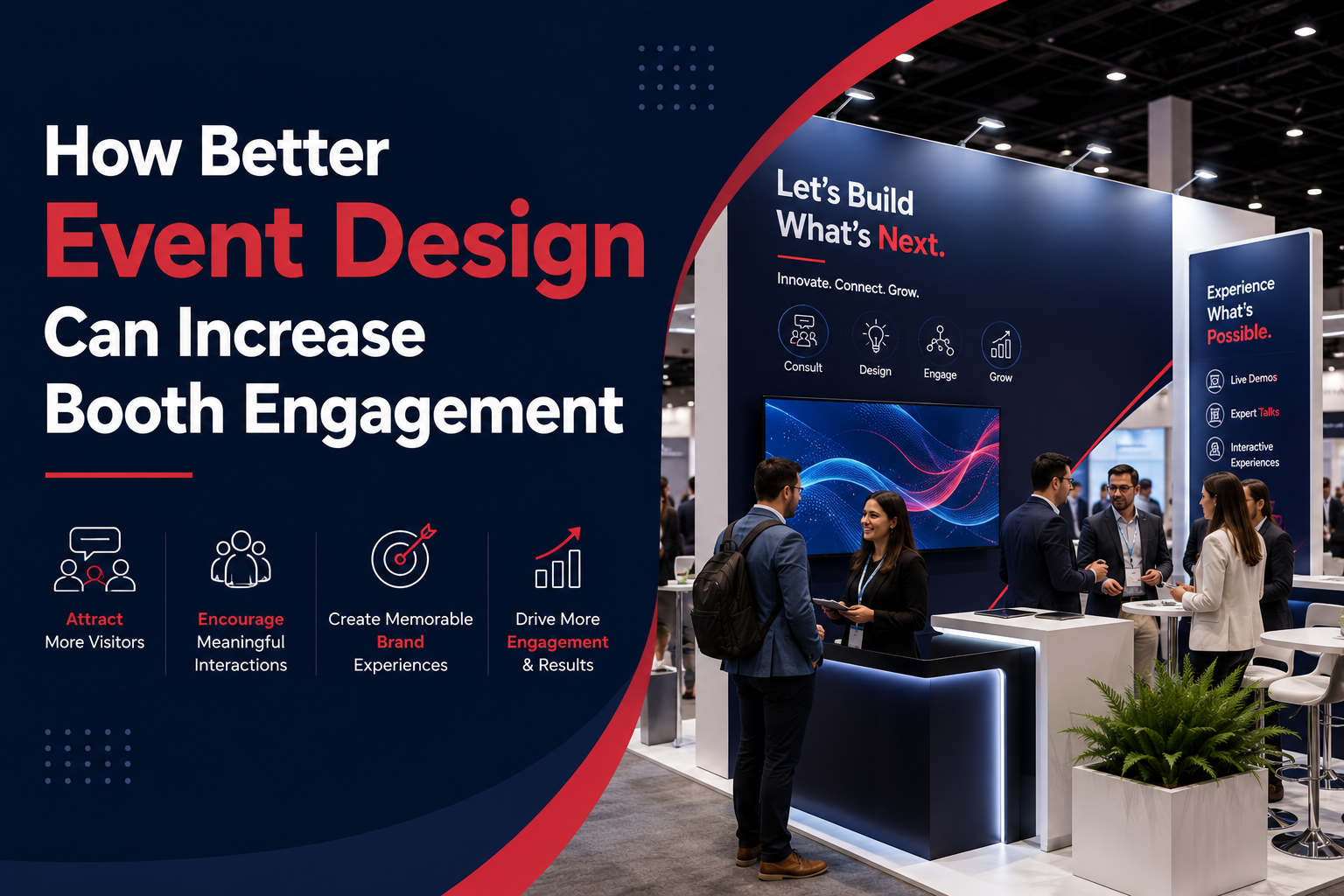
Thoughtful event design helps businesses create spaces that encourage conversations, communicate value quickly, and make visitors want to learn more.
Booth Engagement Starts Before the First Conversation
Attendees often decide whether to approach a booth before speaking with anyone on the team.
The layout, messaging, lighting, graphics, and overall presentation create an immediate impression. A cluttered or confusing booth can make people hesitate, while a clean, inviting space encourages them to step inside.
The goal isn’t simply to attract attention. It’s to make visitors feel comfortable enough to begin a conversation.
Make Your Message Easy to Understand
Many event booths try to communicate too much at once.
Large blocks of text, multiple marketing messages, and crowded graphics force attendees to spend time figuring out what the company actually does. Most won’t.
Instead, focus on one clear message that answers a simple question:
Why should someone stop here?
Supporting visuals, concise headlines, and easy-to-read graphics help visitors understand the value of the business within a few seconds.
Design for Movement, Not Just Appearance
An attractive booth isn’t always an effective booth.
Visitors need enough space to enter, move around, view demonstrations, and speak with staff without feeling crowded.
Consider how people naturally walk through the exhibit area. Open layouts with clear entry points tend to invite more traffic than designs that create physical or visual barriers.
A booth should guide visitors through an experience rather than simply display marketing materials.
Use Interactive Elements With Purpose
Interactive experiences often attract attention, but only when they support the conversation.
Depending on the event, businesses may include:
- Product demonstrations
- Interactive touchscreens
- Digital presentations
- Live software walkthroughs
- Product samples
- Guided experiences
These elements should help visitors better understand the product or service, not distract them from it.
Create Visual Consistency Across the Booth
Strong branding builds recognition.
Every part of the booth should reflect the same visual identity, including:
- Colors
- Typography
- Photography
- Icons
- Digital displays
- Printed materials
- Staff presentation
Consistent branding helps visitors connect different elements of the experience and remember the company after the event.
Give Visitors a Reason to Stay
Getting someone to stop is only the first step.
The next challenge is keeping them engaged long enough to have a meaningful conversation.
Simple strategies include:
Product Demonstrations
Showing how a product works often creates more interest than describing it.
Customer Success Stories
Real examples help visitors understand practical business outcomes.
Educational Content
Short presentations or industry insights provide value even before discussing products.
Comfortable Meeting Areas
Private or semi-private spaces encourage longer conversations with qualified prospects.
The more comfortable and relevant the experience feels, the more likely visitors are to continue the discussion.
Support Your Team With Better Booth Design
Even experienced event staff struggle when the booth layout works against them.
A well-designed space gives team members room to greet visitors, demonstrate products, answer questions, and move naturally between conversations.
It also reduces congestion during busy periods, creating a better experience for both staff and attendees.
Bring Digital Experiences Into the Booth
Modern events often combine physical and digital experiences.
Digital displays, interactive presentations, QR codes, and live product videos help communicate information quickly without relying entirely on printed materials.
These tools also make it easier for visitors to access additional resources after leaving the booth.
Measure More Than Foot Traffic
Booth success isn’t determined only by the number of visitors.
Enterprise marketing teams should also evaluate:
- Average visitor engagement time
- Product demonstrations completed
- Qualified conversations
- Leads captured
- Follow-up meetings scheduled
- Content downloads
- Post-event conversions
These metrics provide a better picture of how effectively the booth supported business goals.
Common Event Design Mistakes
Many booths lose engagement because of avoidable issues.
Some of the most common include:
- Too much text on displays
- Unclear messaging
- Poor lighting
- Crowded layouts
- Limited space for conversations
- Inconsistent branding
- Staff blocking entrances
- Interactive displays with no clear purpose
Addressing these issues before the event often improves visitor engagement without increasing the overall event budget.
Why Strategic Event Design Matters
Enterprise events represent a significant investment, making every interaction valuable.
Booth design should support the entire customer journey—from attracting attention to encouraging meaningful conversations and collecting qualified leads.
This is why many organizations work with event design agency when planning trade shows, conferences, and large-scale exhibitions. A thoughtful design strategy helps ensure the physical space supports marketing goals instead of simply showcasing the brand.
Final Thoughts
Successful event booths don’t rely on size alone. They create an experience that helps visitors quickly understand the business, engage with the team, and leave with a clear impression of the brand.
When design, messaging, and visitor flow work together, booths become more than display spaces. They become places where conversations begin and business relationships grow.
For organizations planning enterprise events, Tangence understands that thoughtful planning, strong visual communication, and carefully executed event design services can help create booth experiences that are memorable, welcoming, and aligned with broader marketing objectives.