
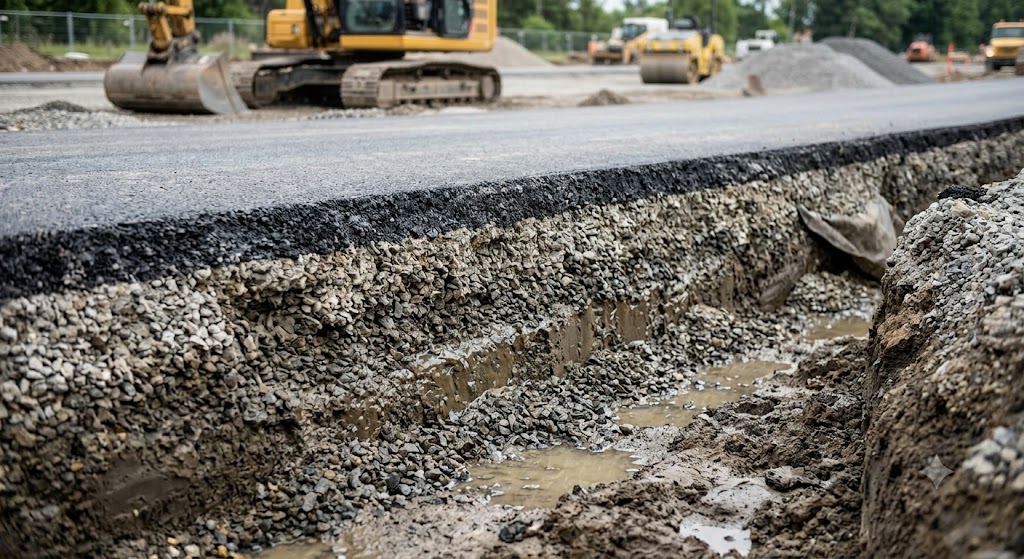
A gravel base can look perfectly fine when a construction project is finished. Everything feels firm, level, and ready to go. Then rain comes… water starts sitting where it should not, and suddenly the surface above begins showing problems. This is one reason people searching for a gravel supplier near me in Orange County LA should think about more than just the type of gravel they need. Drainage matters too.
Poor drainage can slowly affect the gravel beneath a driveway, walkway, parking area, or other construction surface. The tricky part? The problem is often hidden underground at first. By the time cracks, dips, soft spots, or puddles appear, the base may already be struggling.
Water Can Get Trapped in the Gravel Layer
Gravel is often used because it helps create a stable base and allows water to move through the material. But if there is nowhere for that water to go, things can get messy.
Picture water moving down through the surface and into the gravel. Normally, it should continue draining away. With poor drainage, it can sit inside or below the gravel layer instead.
And water that just hangs around… well, that is rarely good news for a construction base.
The gravel may stay wet for longer periods, while the soil underneath can become soft and unstable. Over time, the solid support that the surface depends on may start to weaken.
The Soil Underneath Can Turn Soft
This is where many drainage problems really begin.
Even if the gravel itself is strong, it still depends on the ground beneath it. When too much water collects below the gravel, the soil can become soft. Then the gravel may begin to shift or sink into those weaker areas.
Think of stepping onto firm ground versus stepping onto wet mud. Big difference.
The same basic issue can happen below a construction surface. Once the support underneath becomes uneven, the surface above may eventually settle in certain spots. A driveway can develop low areas. Pavers may move. A parking surface may start feeling uneven.
Ugh… and fixing it later can mean removing part of the finished surface just to repair the base.
Gravel Can Shift Out of Place
Standing water does not always stay perfectly still. Water movement can carry fine material through the gravel layer or disturb the soil around it.
Little by little, the base may lose some of its even support.
This does not usually happen overnight. It is more of a slow, annoying problem. One season of heavy rain might not cause obvious damage, but repeated moisture and poor drainage can gradually change how the base performs.
That is why proper grading and drainage planning should happen before the surface goes in, not after the first major puddle shows up.
Fine Material Can Create Extra Trouble
Not all gravel bases contain the same amount of fine material. Some blends use smaller particles to help the material compact and lock together.
That can work well when the base is installed properly. But excessive moisture can make fine particles move around and collect in unwanted areas. In some cases, this can reduce the spaces that allow water to pass through the base.
So now the water drains even more slowly.
It becomes a frustrating cycle… water affects the material, and the material then has a harder time helping water move away.
Choosing the right aggregate and installing it correctly can help avoid this situation from the beginning.
The Surface Above Can Start Showing Signs of Trouble
Poor drainage below the surface eventually likes to make itself known.
You may notice:
- Low spots where water keeps collecting
- Areas that feel softer than the rest
- Cracks or uneven sections
- Pavers that shift or settle
- Gravel surfacing where it should stay contained
- A driveway or walkway that no longer looks level
Sometimes people focus only on repairing what they can see. But if the drainage problem underneath is still there, the same issue may come back.
That is why it makes sense to look below the surface before spending money on another repair.
Start With the Base and a Good Drainage Plan
A strong construction surface needs more than a layer of gravel dumped into place. The ground should be prepared properly, the material should suit the project, and water should have a clear path away from the area.
Slope matters. Soil conditions matter. Gravel size and base thickness can matter too.
If you are planning a project, talking with an experienced material supplier can make the selection process easier. A reliable gravel supplier near me in Orange County LA can help you find suitable aggregate materials for your construction needs instead of leaving you to guess which option might work.
At Western Materials, we understand that the material beneath the surface can make a real difference in how a project holds up over time. A good gravel base combined with proper drainage gives the finished surface a much better place to start.
Poor drainage might seem like a small issue when everything is new and dry. Give it some time, though… water has a way of finding weak spots. Getting the base and drainage right from the beginning can save a lot of headaches later.
FAQs
1. Can poor drainage cause gravel to sink?
Yes. When water softens the soil beneath the gravel, the base can lose support. This may allow certain areas to settle or sink over time.
2. Why does water stay on top of a gravel base?
Water may remain on or beneath the gravel when the ground has poor drainage, the area is not graded properly, or fine material is blocking the movement of water.
3. Can a gravel base still be useful in wet areas?
Yes, but the project should include a proper drainage plan. The right gravel and correct installation can help manage moisture more effectively.
4. Should drainage be planned before installing a driveway or pavers?
Absolutely. It is much easier to address drainage before the surface is installed than to remove and repair the finished area later.
5. How can we choose the right gravel for a construction project?
Start by considering the type of surface, expected use, soil conditions, and drainage needs. A trusted gravel supplier can also help you choose a material that fits the project.