
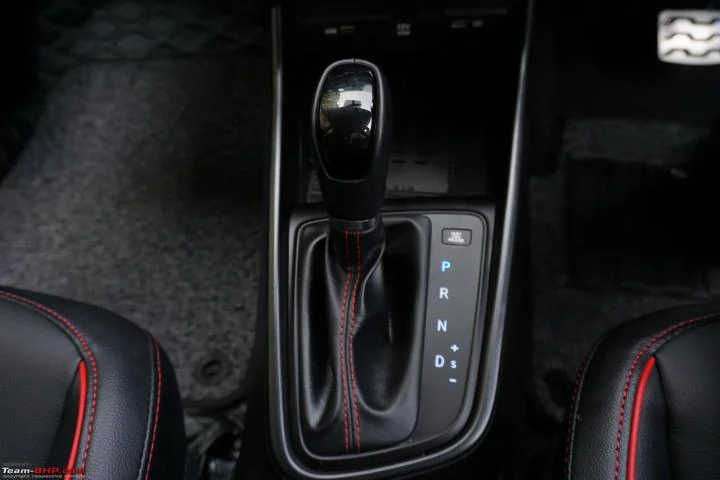
Driving in heavy traffic often means frequent stops, starts and gear changes. For drivers who want to reduce the effort of daily commuting, an automatic car can make the journey more comfortable. Hyundai offers different automatic transmission options, including a Dual-Clutch Transmission (DCT) and an Intelligent Variable Transmission (iVT).
Both remove the need to operate a clutch pedal, but they work differently. A DCT focuses on quick gear changes, while an iVT delivers smooth acceleration. Understanding these differences can help buyers choose a transmission that suits their driving habits.
Why Are More Indian Buyers Choosing Automatic Cars?
Automatic cars are a practical option for people who regularly drive through crowded streets or stop-and-go traffic. They offer several everyday benefits:
- Less driving effort: Drivers do not need to operate a clutch pedal or change gears manually.
- More convenience in traffic: The transmission manages gear changes as the car slows down and moves forward.
- Options across vehicle types: Hyundai offers automatic transmissions in selected hatchbacks, sedans and SUVs.
The driving experience still depends on the transmission, engine and vehicle. Comparing these factors can help buyers choose a car that suits their daily commute and longer journeys.
How Does Hyundai’s Dual-Clutch Transmission (DCT) Work?
A Dual-Clutch Transmission uses two clutches to manage gear changes. One clutch generally handles odd-numbered gears, while the other handles even-numbered gears. The transmission can prepare the next gear in advance, allowing it to change gears quickly.
Unlike a manual gearbox, a DCT does not require the driver to operate a clutch pedal. The system controls the clutches and gear changes automatically.
Hyundai offers a seven-speed DCT with selected turbo-petrol engines. This setup is designed to deliver responsive acceleration and quick gear changes, especially when the driver needs to accelerate.
However, a DCT can behave differently in slow traffic than other automatic transmissions. Drivers should follow Hyundai’s instructions for crawling traffic, prolonged stops and transmission temperature warnings.
What are the Benefits of Hyundai’s DCT?
A DCT can suit drivers who value responsive performance. Its main benefits include:
- Quick gear changes: The transmission shifts quickly, supporting responsive acceleration.
- Engaging driving experience: Selected Hyundai models offer paddle shifters, letting drivers select gear changes manually.
- Turbo-petrol performance: Hyundai pairs its seven-speed DCT with selected turbo-petrol engines, combining engine response with quick shifts.
Fuel efficiency depends on the engine, vehicle, driving conditions and driving style. A DCT should not automatically be considered more fuel-efficient than every other automatic transmission.
Drivers who often travel on highways or enjoy responsive acceleration may find a DCT worth considering. Those who spend long periods in slow-moving traffic should also consider how it operates.
How Does Hyundai’s Intelligent Variable Transmission (iVT) Work?
Hyundai’s Intelligent Variable Transmission or iVT, is based on continuously variable transmission technology. Unlike a conventional gearbox with fixed gear ratios, it continuously changes the ratio based on driving conditions.
The system uses pulleys and a belt mechanism to adjust the ratio between the engine and the wheels. Hyundai’s iVT uses a chain-belt design intended to improve transmission response.
Because the ratio changes continuously, drivers don’t feel the distinct gear shifts they would in a conventional stepped automatic gearbox. This helps deliver smooth acceleration during everyday driving.
Hyundai offers iVT with selected naturally aspirated petrol engines, including the 1.2-litre petrol engine in the i20 and 1.5-litre petrol engines in models such as the CRETA and VERNA.
What Are the Benefits of Hyundai’s iVT?
An iVT may suit drivers who prioritise comfort and smooth operation, particularly during regular city commutes.
- Smooth acceleration: The transmission adjusts its ratio continuously instead of shifting through fixed gears.
- Convenient city driving: Drivers can move through traffic without operating a clutch or changing gears manually.
- Comfortable everyday use: The system delivers gradual, consistent acceleration.
- Multiple driving options: Selected Hyundai models offer drive modes or paddle shifters alongside the iVT.
An iVT may allow the engine speed to rise noticeably during hard acceleration. This is part of how a continuously variable transmission works and may feel different from a DCT’s gear changes.
Actual fuel consumption depends on several factors, including traffic, road conditions, vehicle load and driving style.
What is the Difference Between Hyundai DCT and iVT?
Both transmissions offer automatic driving, but their operating methods create different driving experiences.
| Feature | Hyundai iVT | Hyundai DCT |
| How it works | Continuously varies the gear ratio | Uses two clutches to change between gears |
| Driving feel | Smooth and progressive | Quick and responsive |
| Acceleration | Gradual, consistent delivery | Rapid gear changes support brisk acceleration |
| Common engine pairing | Selected naturally aspirated petrol engines | Selected turbo-petrol engines |
| May suit | Drivers prioritising comfort and daily commuting | Drivers who prefer responsive performance |
The iVT may appeal to those who want smooth progress in everyday traffic, while the DCT may suit drivers who prefer faster gear changes. The best option depends on the vehicle, engine and driving conditions.
Which Hyundai Models Offer DCT and iVT in India?
Hyundai offers these transmissions on selected models and variants. The current range includes the following options:
| Transmission | Engine | Hyundai models |
| 7-speed DCT | 1.0-litre Turbo GDi petrol | Hyundai VENUE |
| 7-speed DCT | 1.5-litre Turbo GDi petrol | Hyundai VERNA, CRETA and ALCAZAR |
| iVT | 1.2-litre naturally aspirated petrol | Hyundai i20 |
| iVT | 1.5-litre naturally aspirated petrol | Hyundai VERNA and CRETA |
The Hyundai i20 N Line and Hyundai VENUE N Line have offered DCT options in their respective ranges, but buyers should check the current model and variant details before relying on availability. Transmission options can change with model updates.
The Hyundai BAYON, unveiled for India in October 2026, offers a 1.5-litre MPi petrol engine with a six-speed manual or iVT. Its transmission choice differs from the turbo-petrol DCT options available on selected Hyundai models.
Final Thoughts
Hyundai’s DCT and iVT transmissions offer different approaches to automatic driving. The DCT provides quick gear changes and responsive performance with selected turbo-petrol engines, while the iVT focuses on smooth acceleration with selected naturally aspirated petrol engines. Comparing the transmission with the engine, vehicle and daily driving conditions can help buyers make an informed choice. Checking the latest variant specifications and following the owner’s manual will also help owners understand how to use their chosen transmission.