
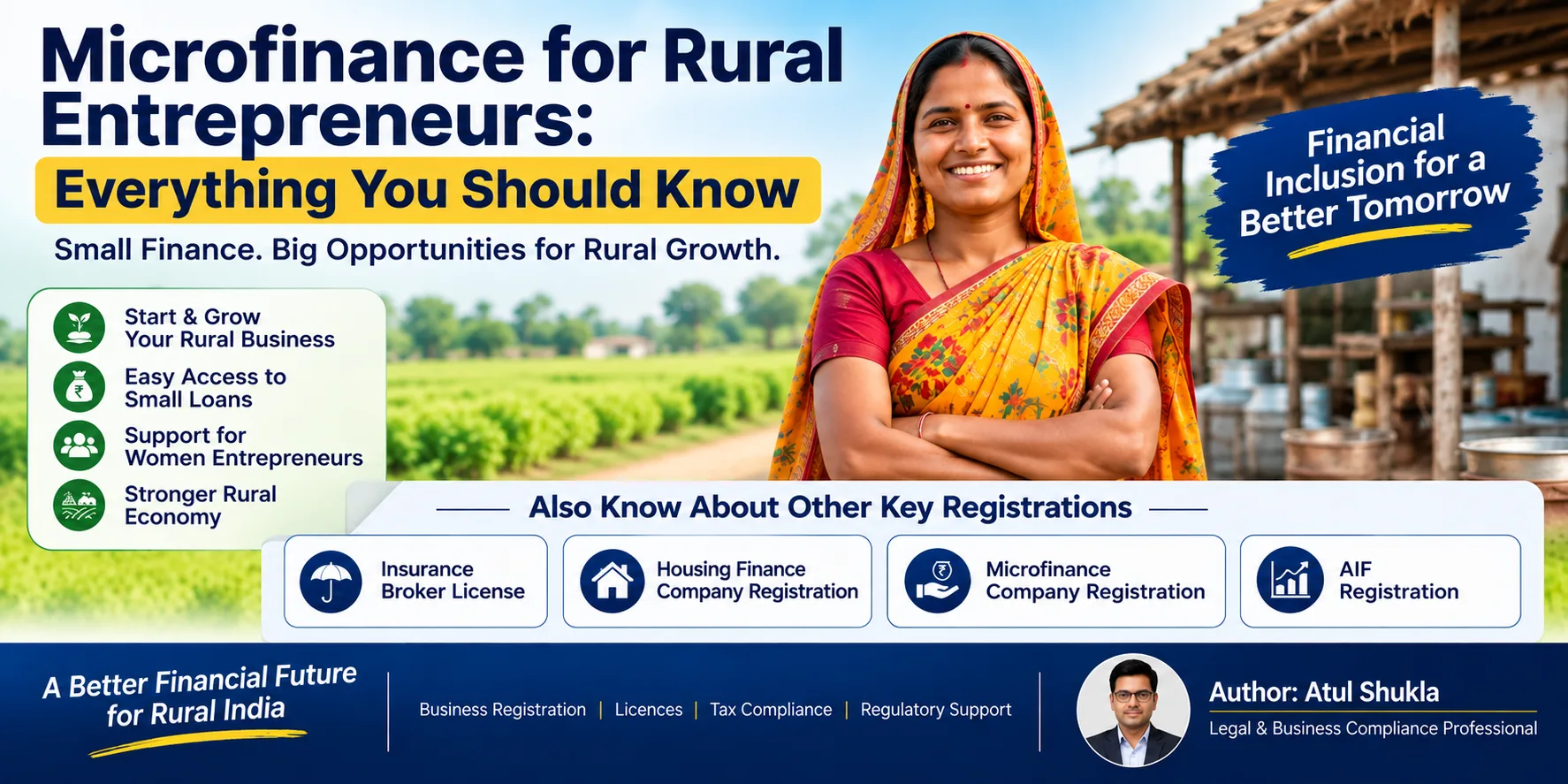
Rural entrepreneurs often have good business ideas but may not have enough money to start or expand their businesses. Traditional bank loans can sometimes be difficult to access because of documentation, credit history, income proof, or lack of collateral.
This is where microfinance can help.
Microfinance provides small-value financial services, especially credit, to people and small businesses that may have limited access to traditional banking. It can support activities such as farming, dairy businesses, tailoring, small shops, handicrafts, food businesses, transportation, and other rural enterprises.
In India, the Reserve Bank of India (RBI) regulates microfinance loans provided by regulated entities. Under the current framework, a microfinance loan is a collateral-free loan to a household with annual household income up to ₹3 lakh.
What Is Microfinance?
Microfinance means providing small financial services to people with limited access to formal financial institutions.
The services may include:
- Small business loans
- Working capital loans
- Equipment financing
- Group-based lending
- Financial education
- Insurance-linked financial services
- Other financial products, depending on the institution
For a rural entrepreneur, even a small loan can help purchase raw materials, add inventory, buy livestock, repair equipment, or expand a small business.
How Does Microfinance Help Rural Entrepreneurs?
Rural businesses usually operate on a smaller scale. A business owner may not need a large corporate loan but may need ₹20,000, ₹50,000, ₹1 lakh, or another suitable amount to grow.
Microfinance can help in several ways.
1. Starting a Small Business
A person can use financing to start a small shop, tailoring unit, food business, dairy activity, handicraft business, or other local enterprise.
2. Buying Business Equipment
Loans can help entrepreneurs purchase sewing machines, agricultural equipment, small tools, refrigerators, food-processing equipment, or other assets needed for business.
3. Managing Working Capital
A business may need money to buy stock before receiving payment from customers. Microfinance can help manage such short-term working-capital requirements.
4. Supporting Women Entrepreneurs
Microfinance has an important role in supporting women-led businesses, particularly through self-help groups (SHGs) and joint-liability structures.
5. Creating Local Employment
When a rural business grows, it may create work for family members and other people in the local community.
Who Can Benefit From Microfinance?
Microfinance may be useful for rural entrepreneurs involved in:
- Dairy farming
- Poultry
- Small retail shops
- Tailoring
- Handicrafts
- Food processing
- Agriculture-related activities
- Transport services
- Beauty and personal-care businesses
- Small manufacturing
- Local service businesses
The exact eligibility and loan conditions depend on the lender and applicable regulations.
What Are the Main Benefits of Microfinance?
Easy Access to Small Loans
Microfinance focuses on smaller loans, making it more suitable for many micro-entrepreneurs.
No Traditional Collateral for Microfinance Loans
RBI’s regulatory framework defines a microfinance loan as collateral-free. However, borrowers must still satisfy the lender’s eligibility and assessment requirements.
Supports Financial Inclusion
Microfinance can connect underserved households and entrepreneurs with formal financial services.
Helps Build Financial Discipline
Regular repayment can help borrowers develop a formal credit history, subject to the lender’s reporting and applicable credit bureau processes.
Supports Business Growth
A small amount of timely funding can help a rural entrepreneur increase stock, purchase equipment, or expand operations.
How Does a Rural Entrepreneur Apply for a Microfinance Loan?
The exact process depends on the lender, but it generally involves:
- Identifying the business and funding requirement.
- Checking eligibility.
- Providing KYC and other required documents.
- Completing the lender’s credit assessment.
- Accepting the loan terms after understanding the cost and repayment schedule.
- Receiving the approved amount.
- Making repayments according to the agreed schedule.
Borrowers should always understand the interest rate, fees, repayment frequency, penalties, insurance-related charges, and other applicable terms before accepting a loan.
What Is Microfinance Company Registration?
If an entrepreneur wants to establish an organisation that provides microfinance loans, regulatory compliance becomes important.
A company cannot simply start carrying out regulated lending activities without checking whether RBI registration or another applicable regulatory framework is required.
For businesses planning to operate as an NBFC-MFI, Micro finance Company Registration involves understanding the applicable RBI framework, corporate structure, capital requirements, governance, policies, and ongoing compliance.
RBI’s microfinance directions apply to several regulated entities, including banks and NBFCs, including microfinance institutions and housing finance companies.
The applicable requirements can change based on the proposed business model and regulatory status. Therefore, promoters should obtain professional advice before starting lending operations.
Microfinance and Other Financial Business Registrations
Microfinance is part of a broader financial-services ecosystem. Entrepreneurs entering financial services may also come across other registrations and licences.
Insurance Broker License
If a business wants to carry out insurance broking activities, it needs to follow the applicable regulatory framework and obtain the required Insurance broker license.
An insurance broker is different from a microfinance institution. Microfinance focuses on financial services such as eligible small loans, while insurance broking involves assisting customers with insurance products under the applicable insurance regulations.
Therefore, businesses should not treat an insurance broker licence as a substitute for any lending-related registration.
Housing Finance Company Registration
Businesses that want to operate as housing finance companies need to understand the requirements applicable to housing finance activities.
Housing finance company registration is different from microfinance company registration. A housing finance business generally focuses on housing-related finance, while an MFI focuses on eligible microfinance lending.
Both areas are regulated financial activities, so proper regulatory planning is important before starting operations.
AIF Registration
An AIF registration is relevant to an Alternative Investment Fund, which is a different financial structure used for investment activities.
An AIF is not the same as a microfinance company. A business should choose its structure based on what it actually plans to do—such as lending, investing, insurance broking, or housing finance.
This distinction is important because using the wrong structure can create regulatory and compliance problems.
Microfinance vs Traditional Business Loans
| Feature | Microfinance | Traditional Business Loan |
| Target users | Low-income households and micro-entrepreneurs | Businesses of different sizes |
| Loan size | Generally smaller | Can be significantly larger |
| Collateral | Microfinance loans are collateral-free under the RBI definition | May require collateral, depending on product |
| Documentation | Depends on lender | Often more extensive |
| Purpose | Small businesses and eligible household needs | Business expansion, working capital, assets, etc. |
| Target area | Often strong focus on underserved areas | Broad market |
The actual loan terms depend on the lender, borrower profile, product, and applicable regulations.
Things Rural Entrepreneurs Should Check Before Taking a Loan
A loan can help a business grow, but it should be used carefully.
Before borrowing, check:
- How much money is actually required?
- What will the loan be used for?
- What is the total cost of borrowing?
- How much is the regular repayment?
- Can the business generate enough cash flow for repayment?
- Are there processing fees or other charges?
- Are there insurance-related charges?
- What happens if a payment is delayed?
- Is the lender regulated or otherwise legally authorised for the activity?
Borrow only an amount that the business can reasonably repay.
Challenges of Microfinance
Microfinance can create opportunities, but it also has challenges.
Limited Financial Knowledge
Some first-time borrowers may not fully understand interest, fees, repayment schedules, or credit reporting.
Irregular Rural Income
Agriculture and other rural activities can have seasonal income. This can make repayment difficult if cash flows are not planned properly.
Risk of Over-Borrowing
Taking multiple loans without considering total repayment obligations can create financial pressure.
Business Risk
A loan does not guarantee business success. Entrepreneurs should first understand demand, pricing, competition, operating costs, and expected income.
Read more – Top Benefits of BIS Certification for Indian and Global Businesses
How Can Microfinance Support Rural Development?
Microfinance can have an impact beyond the individual borrower.
When a rural entrepreneur gets access to responsible finance, the money may be used to:
- Expand a local business
- Purchase equipment
- Increase production
- Hire workers
- Improve household income
- Create local economic activity
This makes microfinance an important part of financial inclusion and rural entrepreneurship.
Why Compliance Matters for Microfinance Businesses
Financial businesses handle people’s money and therefore require strong systems.
A microfinance organisation needs to pay attention to areas such as:
- Customer due diligence
- Fair lending practices
- Loan documentation
- Interest and charges
- Grievance handling
- Credit information reporting
- Risk management
- Accounting and financial reporting
- RBI requirements, where applicable
RBI’s framework also includes customer-centric requirements for regulated entities engaged in microfinance lending.
Final Thoughts
Microfinance can be a useful financial tool for rural entrepreneurs who need relatively small amounts of capital to start, operate, or expand their businesses.
It can support small shops, dairy businesses, tailoring units, handicrafts, food businesses, agriculture-linked activities, and many other rural enterprises.
At the same time, borrowers should understand the total cost and repayment obligation before taking a loan. Businesses planning to enter the financial-services sector should also select the correct legal and regulatory structure.
Whether the requirement involves Microfinance Company Registration, Insurance broker license, Housing finance company registration, or Aif registration, professional guidance can help promoters understand the applicable regulatory requirements and avoid costly compliance mistakes.
FAQs
1. What is microfinance?
Microfinance refers to financial services designed for people and small businesses that may have limited access to traditional financial institutions. Microfinance loans under RBI’s framework are collateral-free loans provided to eligible households meeting the prescribed income criteria.
2. Can rural entrepreneurs use microfinance for business purposes?
Yes. Eligible borrowers may use financing for permitted productive and household purposes, subject to the lender’s terms and applicable regulations.
3. Is collateral required for a microfinance loan?
Under RBI’s definition, a microfinance loan is collateral-free. However, the borrower must meet the lender’s eligibility and assessment requirements.
- What is Microfinance Company Registration?
Microfinance Company Registration generally refers to the legal and regulatory process involved in setting up an entity to conduct microfinance-related lending activities. The exact requirements depend on the proposed structure and applicable RBI regulations.
5. Is Microfinance Company Registration the same as Housing Finance Company Registration?
No. They relate to different financial activities and regulatory requirements. Housing finance companies focus on housing-related finance, while microfinance institutions focus on eligible microfinance lending.
6. What is an Insurance broker license?
An Insurance broker license is the regulatory authorisation required for eligible entities conducting insurance broking activities. It is separate from microfinance-related lending registration.
7. What is AIF registration?
AIF registration relates to Alternative Investment Funds. It is a separate regulatory framework from microfinance lending and is relevant to businesses structured as AIFs.
8. Can microfinance help women entrepreneurs?
Yes. Microfinance can support women entrepreneurs by providing access to formal credit for eligible business and household needs, including through SHGs and other lending models.
9. Is microfinance available only in villages?
No. Microfinance can serve eligible borrowers in both rural and urban areas. However, it has an important role in improving financial access in underserved communities.
10. Why should entrepreneurs take professional help for financial registrations?
Financial activities are regulated and may involve specific eligibility, capital, documentation, governance, and ongoing compliance requirements. Professional guidance can help businesses choose the appropriate structure and understand the applicable process.
About Corpbiz
Corpbiz is a professional business and regulatory compliance service provider helping entrepreneurs and businesses with registrations, licences, tax compliance, and other legal and regulatory requirements.
The team assists businesses in understanding applicable compliance requirements and completing documentation and filing processes.
About the Author
Atul Shukla
Legal & Business Compliance Professional
Atul Shukla writes on business registration, financial regulations, taxation, licensing, and regulatory compliance. His content focuses on explaining complex legal and business topics in simple language so that entrepreneurs can make better-informed decisions.