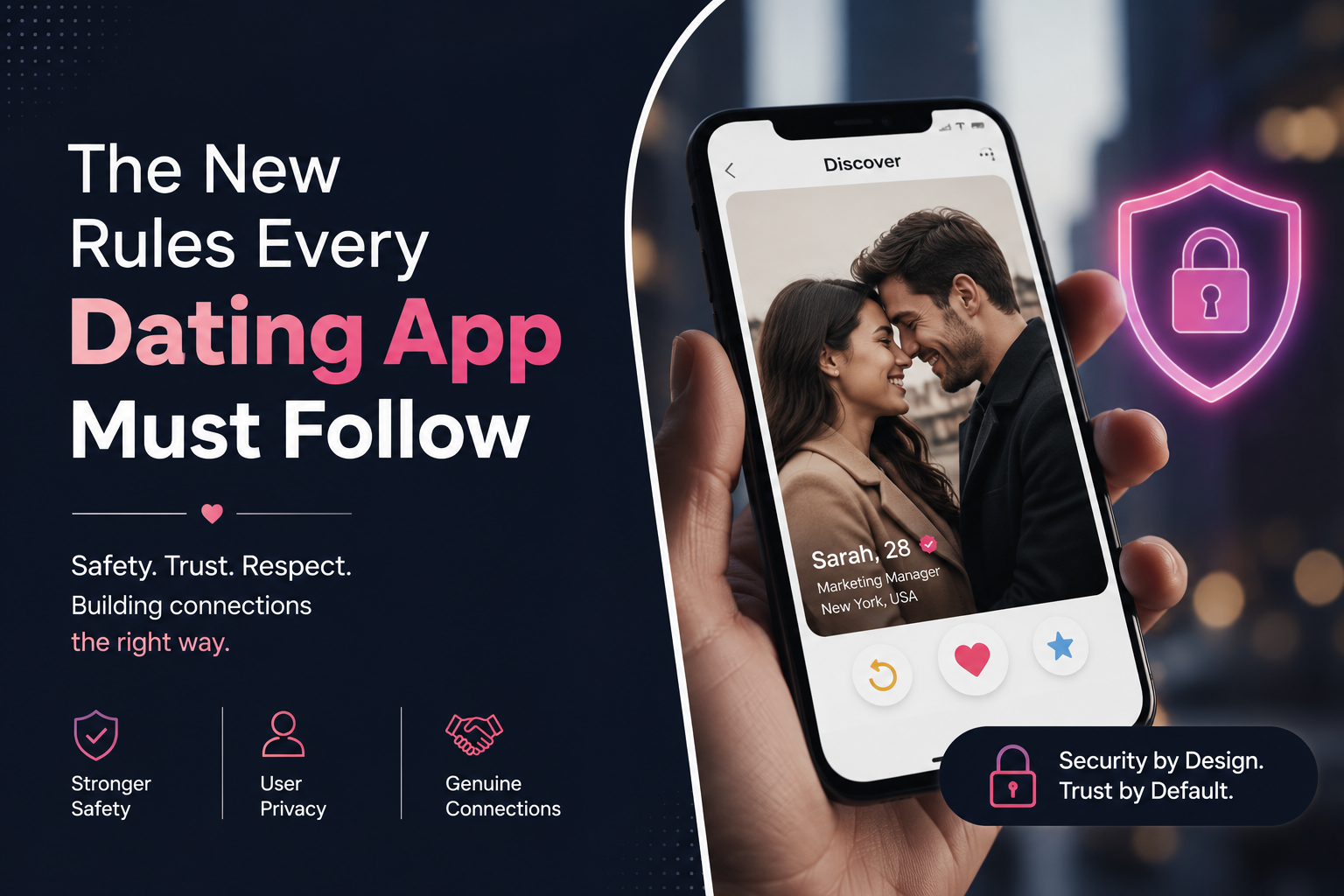
Online dating has become a normal part of modern relationships, but user expectations have changed dramatically over the past few years. People no longer choose a platform based only on matching algorithms or attractive interfaces. They expect stronger privacy controls, transparent moderation, smarter recommendations, seamless communication and complete confidence that their personal information is protected.
For businesses entering the dating industry, meeting these expectations is no longer optional. Every feature, workflow and security layer directly influences user retention, trust and long-term revenue. Companies investing in dating app development services need to focus on compliance, safety, personalization and scalability from the first stage of planning instead of treating them as future upgrades.
User Trust Has Become the Biggest Competitive Advantage
The dating app market is crowded, making trust one of the strongest differentiators. A visually appealing interface may attract downloads, but users quickly abandon platforms that expose them to fake profiles, spam messages or poor moderation.
Modern platforms are expected to verify users without creating lengthy onboarding experiences. Email verification alone is rarely enough. Many successful platforms now combine AI-powered identity checks, behavioral analysis, selfie verification and suspicious activity monitoring.
Trust also extends beyond account verification. Users appreciate transparent privacy policies, clear reporting options and visible actions against abusive behavior. When people feel protected, they interact more confidently, spend more time on the platform and are more likely to purchase premium subscriptions.
Privacy Is No Longer a Hidden Feature
Privacy regulations continue to evolve and users have become far more aware of how their information is collected and used. Dating applications handle highly personal data, making responsible data management essential.
Leading platforms provide users with greater control over their information, including profile visibility, location sharing preferences, data deletion requests and communication permissions.
A strong privacy-first approach generally includes:
- End-to-end encrypted conversations
- Granular profile visibility settings
- Secure payment processing
- Transparent consent management
- Compliance with regional privacy regulations
Professional dating app development solutions often include privacy architecture during the planning stage instead of adding security measures after launch. That approach minimizes future compliance risks while improving overall user confidence.
AI Is Improving Match Quality Beyond Basic Swiping
Traditional swipe-based matching has become predictable. Modern users expect recommendations that actually reflect their interests, lifestyle, communication style and relationship goals.
Artificial intelligence helps platforms analyze hundreds of behavioral signals that extend far beyond profile information. Instead of relying solely on age, distance or interests, AI continuously improves recommendations using user activity and engagement patterns.
AI Features Making the Biggest Difference
Businesses increasingly prioritize capabilities such as:
- Intelligent compatibility scoring
- Conversation suggestions
- Fake profile detection
- Personalized profile recommendations
- Smart content moderation
- Behavioral fraud monitoring
These technologies improve user satisfaction while reducing moderation workloads, making them valuable additions during dating app development planning.
Safety Features Influence User Retention
Safety is no longer treated as an additional feature available only on premium platforms. It has become an essential expectation for every dating application regardless of audience size.
People want reassurance before meeting someone offline. Applications that actively support safe interactions naturally encourage higher engagement and better reviews.
Safety Capabilities Users Expect
Modern dating platforms commonly include:
Live Location Sharing
Temporary location sharing with trusted contacts provides an additional layer of security during in-person meetings.
Emergency Assistance
Quick-access emergency buttons help users contact emergency services or selected contacts if needed.
Profile Verification
Verified profiles reduce impersonation and improve trust across the community.
Block and Report System
Simple reporting workflows encourage users to report abusive behavior before it spreads across the platform.
AI Content Screening
Automatic detection of offensive messages, inappropriate images, scams and suspicious behavior improves community quality without requiring constant manual moderation.
Subscription Models Must Deliver Real Value
Premium memberships remain one of the strongest revenue sources for dating platforms, but users have become selective about paid features. Simply removing advertisements or increasing daily swipes is rarely enough.
Successful monetization focuses on delivering meaningful improvements to the dating experience.
Popular premium features include advanced search filters, profile boosts, unlimited messaging, read receipts, travel mode, profile insights and AI-assisted matchmaking.
Businesses working with a reliable dating app development company often design flexible monetization models that support subscriptions, in-app purchases, virtual gifts and promotional campaigns without disrupting the user experience.
Accessibility Is Becoming a Business Requirement
Inclusive design helps dating platforms reach wider audiences while improving usability for everyone. Accessibility also contributes to stronger user satisfaction because simple navigation benefits every demographic.
Modern dating applications increasingly support screen readers, adjustable text sizes, high-contrast themes, voice interaction, multilingual interfaces and simplified onboarding experiences.
Accessibility should influence design decisions from the beginning rather than becoming a redesign project after launch.
Performance Matters More Than Feature Count
Many businesses attempt to differentiate their products by continuously adding new functionality. Unfortunately, overloaded applications often become slower, more confusing and harder to maintain.
Users generally value consistency over feature quantity. Fast loading times, responsive messaging, reliable notifications and stable video calling often create a better experience than dozens of underused features.
High-performance architecture also prepares applications for future growth. As user numbers increase, the platform should continue delivering consistent performance without requiring major infrastructure changes.
Scalable backend systems, cloud deployment, efficient database management and optimized APIs remain essential components of modern custom dating app development services, particularly for businesses planning international expansion.
Transparent Moderation Builds Stronger Communities
Community guidelines have evolved beyond basic terms and conditions. Users expect visible moderation practices that demonstrate fairness and accountability.
Platforms should clearly explain why content was removed, why accounts were suspended and how appeals are handled. Transparent moderation reduces frustration while encouraging healthier interactions across the community.
Balanced moderation combines AI automation with human review. Automated systems identify suspicious activity quickly, while experienced moderators evaluate complex cases requiring contextual judgment.
A healthy community ultimately becomes one of the platform’s strongest marketing assets because satisfied users naturally recommend trustworthy applications to friends and colleagues.
Planning for Future Growth Starts Before Launch
Launching an application is only the beginning of its lifecycle. Continuous improvements based on user feedback, behavioral analytics and market trends determine long-term success.
Development roadmaps should account for future enhancements such as AI relationship coaching, voice-enabled interactions, virtual dating experiences, wearable device integration and enhanced identity verification technologies.
Businesses that prepare scalable infrastructure from day one avoid expensive architectural changes later while maintaining uninterrupted user experiences during rapid growth.
Instead of chasing every new trend, successful platforms prioritize stable performance, meaningful innovation, user safety and responsible data practices. Those priorities continue attracting loyal communities even as competition becomes stronger.
Conclusion
The expectations surrounding dating applications have changed permanently. Privacy, security, intelligent matchmaking, transparent moderation, accessibility and reliable performance now influence user decisions as much as visual design or matching algorithms.
Businesses planning new platforms or modernizing existing ones should view these capabilities as essential foundations rather than optional upgrades. Working with experienced dating app development services providers helps transform changing user expectations into practical product strategies that support sustainable growth, stronger engagement and long-term business success.
FAQs
How long does it usually take to launch a dating application?
Development timelines vary depending on feature complexity, integrations, testing requirements and platform support. A basic product may require several months, while feature-rich applications with AI capabilities and advanced security generally need a longer development cycle.
Can an existing dating app be upgraded instead of rebuilding it?
Yes. Many businesses improve existing platforms by modernizing the interface, upgrading security, introducing AI-powered recommendations, improving backend performance and adding new monetization features without replacing the entire application.
What technology stack works best for modern dating platforms?
The ideal technology stack depends on scalability goals, target devices, expected traffic and required integrations. Cross-platform frameworks, cloud-native infrastructure, real-time messaging technologies, AI services and secure backend architectures are commonly selected for long-term growth.
Why should businesses focus on scalability before acquiring users?
Preparing infrastructure early helps applications handle increasing traffic, larger databases, higher messaging volumes and expanding feature sets without performance issues. Early scalability planning also reduces future maintenance costs and minimizes service disruptions.