
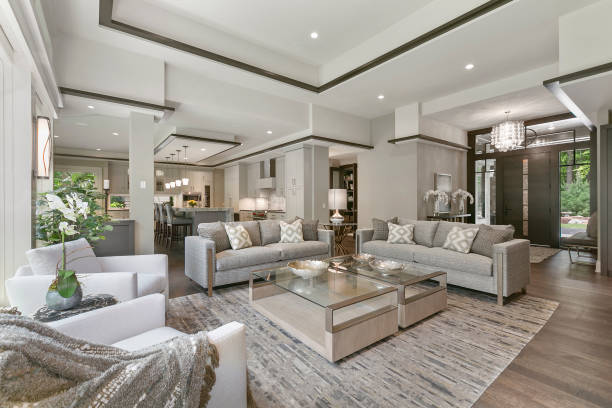
People love to imagine a clean beginning. Like a neat sketch, a clear plan, everything figured out early. That’s not how it goes. The story behind the Custom Home Dragon Residence started kind of scattered, honestly. A bunch of ideas, half-formed thoughts, some contradictions too. The homeowners didn’t walk in with a perfect vision. They had feelings, preferences, a few strong opinions… and a lot they weren’t sure about yet. That’s usually the real starting point. Not clarity, but noise.
Figuring Out What Actually Matters
Early conversations weren’t smooth. Some days it felt like progress, other days like going in circles. One minute they wanted something minimal, next minute they were talking about bold textures and statement pieces. Happens more than people admit. But if you sit with it long enough, patterns start to show. What they keep coming back to, what they instantly reject without thinking. That’s the good stuff. That’s where the design begins to take shape, not from a Pinterest board but from real reactions.
How People Live (Not How They Think They Live)
This part gets overlooked a lot. People design for the life they imagine, not the one they actually live. Big mistake. With this home, there was a conscious effort to stay honest. Morning routines, clutter habits, where things pile up, all of it. The kitchen ended up bigger than planned because cooking wasn’t just occasional, it was daily, serious. A hallway got adjusted because it was being used more like a workspace shortcut. Small changes, sure, but they add up fast. A house that works quietly in the background, that’s the goal.
Materials That Age Like Real Life
Trendy is tempting. Always is. Clean finishes, sharp contrasts, all that stuff you see everywhere. But trends fade, and not always gracefully. The Dragon Residence leaned a bit different. Materials were picked with time in mind. Wood that marks a little instead of staying perfect. Stone that softens visually. Nothing too precious. Because real life isn’t careful. And honestly, a home that looks better slightly worn-in? That’s a win.
Things Don’t Go As Planned (And That’s Fine)
There were bumps. Of course there were. Budget tweaks, design changes mid-way, a couple of “this looked better on paper” moments. One feature got scaled back after seeing it in actual space. Another got dropped completely. It’s easy to call those compromises, but it didn’t feel like losing something. More like adjusting course. The core idea stayed intact. That’s what matters. If you hold too tightly to every early decision, you end up forcing things that shouldn’t be there.
People Working Together, Or Not
Here’s the blunt truth: a project like this can fall apart fast if people don’t communicate. Doesn’t matter how talented everyone is individually. This one worked because there was actual back-and-forth. Not just emails and drawings, but real conversations. Quick decisions on-site, some disagreements too, yeah. But useful ones. Nobody was trying to “win,” they were trying to get it right. That shift makes a huge difference, even if it sounds obvious.
The Small Stuff That Ends Up Feeling Big
Funny thing is, the most important details aren’t the flashy ones. It’s the stuff you barely notice at first. Light hitting a wall at the right time of day. Storage that’s just where you need it without thinking. Transitions between rooms that don’t feel abrupt. These things don’t show off. But you feel them. Every day. And they’re usually the result of someone paying attention a little longer than expected.
Thinking Beyond Move-In Day
A lot of homes are designed for the “wow” moment. That first impression. But what about five years in? Ten? That’s where things get real. This project had that long-term thinking baked in, even when it slowed things down. Maintenance, durability, flexibility. Teams offering Property Development Services in Las Vegas tend to look at things that way, not just how it photographs, but how it holds up. It’s not the exciting part of design, but it’s probably the most important.
That Quiet Moment When It Clicks
There wasn’t some big dramatic reveal at the end. No perfect staged moment. It was quieter than that. Walking through the space and realizing nothing felt forced. It just worked. The flow, the light, the materials, everything felt settled. Like it had been there longer than it actually had. That’s a weird thing to explain, but you know it when you feel it.
Conclusion: Not Perfect, Just Right
The story behind the Custom Home Dragon Residence isn’t about getting everything right the first time. It’s about staying flexible without losing direction. Letting ideas evolve, fixing what doesn’t work, and not overthinking every imperfection. Because in the end, a thoughtfully designed home shouldn’t feel like a project. It should feel like a place you can actually live in. Messy days, quiet mornings, all of it. And if it does that well, honestly, that’s enough.