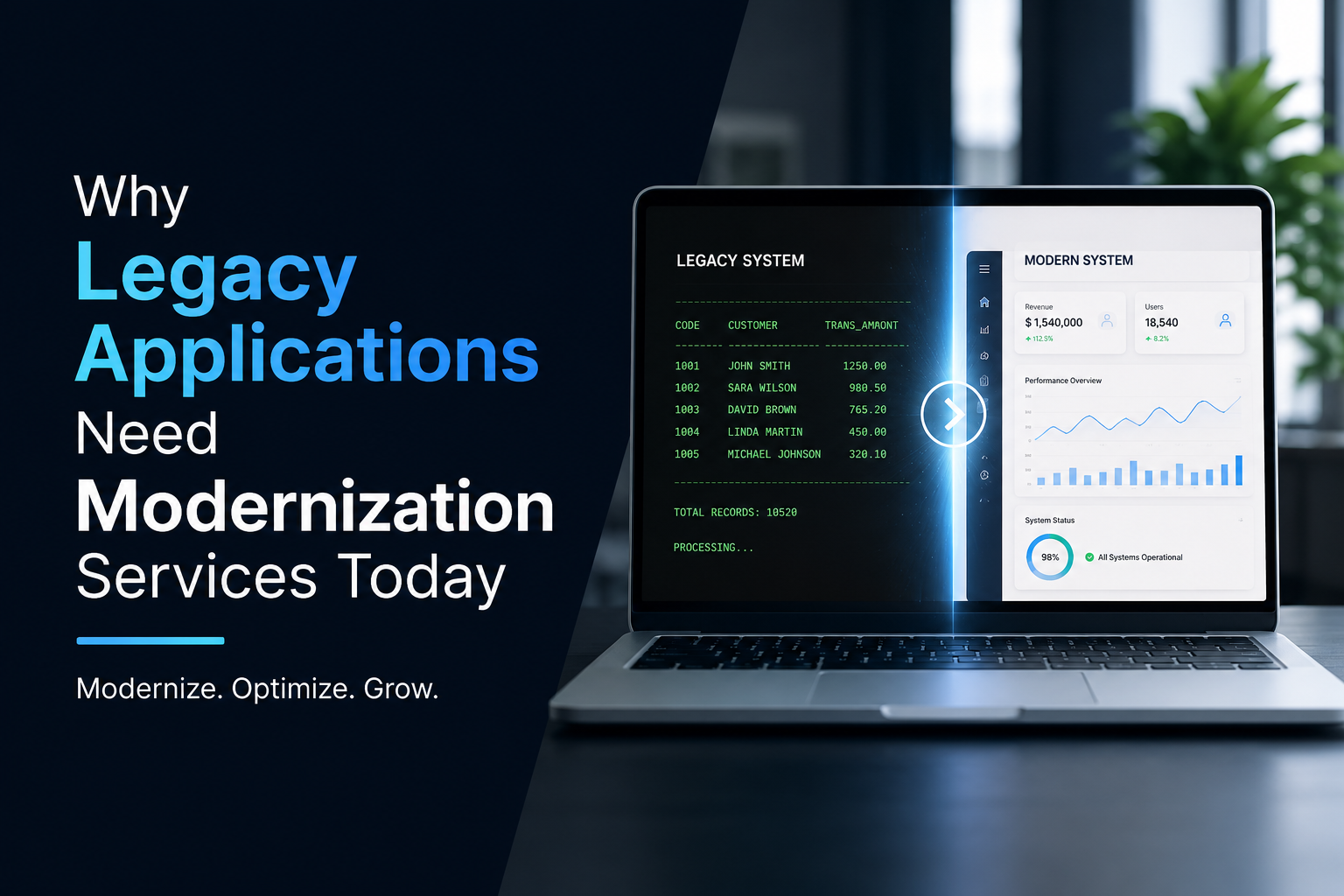
Every business reaches a point where technology that once delivered value begins holding it back. Legacy applications often remain deeply connected to daily operations, yet they become increasingly difficult to maintain as customer expectations, cybersecurity standards and digital ecosystems continue to evolve.
Replacing an entire software environment isn’t always practical. Years of business logic, integrations and operational data make complete replacement expensive and risky. A smarter approach is modernizing what already works while improving everything that no longer meets current business demands. That’s why organizations across industries are turning to application modernization services to improve performance, increase flexibility and extend the lifespan of mission-critical software.
Modernization is no longer viewed as an IT initiative alone. It has become a business strategy that supports innovation, operational efficiency and long-term competitiveness.
Legacy Software Is Costing More Than Most Businesses Realize
The biggest expense of outdated applications isn’t always visible on financial reports. Hidden costs accumulate through slower processes, delayed software releases, expensive maintenance, security incidents and missed business opportunities.
Many older systems depend on obsolete frameworks that require specialized developers who are increasingly difficult to find. Integrating these systems with modern platforms often demands custom workarounds, adding complexity every time a business introduces new technology.
As organizations grow, legacy software gradually becomes a limitation instead of an asset.
Warning Signs Your Existing Applications Need Modernization
Technology rarely fails overnight. Most legacy systems show gradual warning signs before becoming critical business problems.
Organizations should pay attention when they notice:
- Software updates taking longer than expected
- Increasing infrastructure and support expenses
- Poor performance during high user traffic
- Difficulty connecting with modern cloud platforms
- Frequent security patches and compliance concerns
- Limited flexibility when launching new products or services
Ignoring these indicators often leads to larger modernization costs later. Many businesses address these issues early through legacy application modernization services, allowing them to preserve valuable systems while improving reliability and scalability.
Modernization Delivers Business Value Beyond Technology
Updating applications is not simply about using newer programming languages or infrastructure. The real objective is creating software that supports business growth more effectively.
Faster Business Operations
Modern applications eliminate unnecessary manual processes, improve workflow automation and allow teams to access information more efficiently. Reduced processing time translates into better productivity across departments.
Stronger Security Framework
Cyber threats continue to evolve, while many legacy systems remain dependent on unsupported technologies. Modern architectures include stronger authentication, encryption, automated security monitoring and compliance-ready infrastructure.
Greater Flexibility for Future Growth
Business priorities change quickly. Modern applications make it easier to introduce new products, expand services and support growing customer demands without major redevelopment projects.
Cloud Modernization Is Becoming the Preferred Strategy
Traditional on-premise infrastructure often limits performance, scalability and operational efficiency. Modern businesses increasingly redesign applications to maximize cloud capabilities rather than simply relocating existing systems.
With cloud-native application modernization, applications are rebuilt using technologies such as microservices, containers, serverless computing and automated deployment pipelines. These architectures improve resilience while allowing development teams to release updates more frequently.
At the same time, cloud application modernization services simplify migration from legacy environments, helping businesses reduce infrastructure costs while improving system availability and disaster recovery capabilities.
Cloud adoption also gives organizations the flexibility to adjust computing resources based on changing business demands.
Different Modernization Approaches Fit Different Business Goals
Every legacy application has its own architecture, dependencies and operational requirements. Selecting the right modernization path depends on business priorities rather than following a single methodology.
Infrastructure Migration
Applications move to modern environments with minimal modifications, delivering faster improvements while reducing hardware dependency.
Code Enhancement
Existing software is optimized by restructuring source code, improving maintainability, performance and compatibility with current technologies.
Architectural Transformation
Large enterprise applications are divided into modular components that improve scalability, integration and independent deployment.
Complete Redevelopment
When applications can no longer support future business requirements, rebuilding them provides the opportunity to introduce modern user experiences, stronger security and greater flexibility.
An experienced application modernization consulting team evaluates each application individually before recommending the most practical modernization roadmap.
Modern Applications Create Better Digital Experiences
Customers expect fast, personalized and uninterrupted digital interactions regardless of the device they use. Older applications often struggle to deliver these experiences because they were never designed for today’s digital-first environment.
Organizations modernizing their backend systems frequently expand customer engagement by integrating custom mobile app development services. Mobile applications connected to modern infrastructure provide secure access to business services while improving convenience for customers and employees alike.
Long-term success also depends on continuous improvements. A dependable mobile app maintenance service helps organizations keep applications optimized through regular updates, performance enhancements, security improvements and compatibility with evolving operating systems.
Together, modernization and mobile optimization support stronger customer satisfaction while reducing operational complexity.
Selecting the Right Modernization Partner
A successful modernization initiative depends as much on strategy as it does on technology. Businesses should evaluate service providers based on their ability to understand operational challenges, not just software development expertise.
Important qualities include:
Business-Centric Planning
The modernization roadmap should align with organizational goals, future expansion plans, compliance requirements and budget considerations.
Broad Technical Expertise
Experienced teams understand cloud migration, API integration, DevOps automation, cybersecurity, database modernization and enterprise architecture.
Structured Risk Management
Reliable providers minimize operational disruption through phased implementation, testing and migration strategies that protect business continuity.
Ongoing Optimization
Technology continues evolving after deployment. Continuous monitoring and performance improvements ensure applications remain secure, scalable and aligned with changing business needs.
Final Thoughts
Businesses no longer compete solely through products or pricing they compete through technology, speed and customer experience. Legacy applications that once supported growth can gradually become barriers to innovation if left unchanged.
Modernization allows organizations to retain valuable business knowledge while improving performance, security, scalability and operational efficiency. Instead of replacing every application, businesses can transform existing systems into flexible digital assets capable of supporting cloud technologies, AI initiatives, automation and future expansion.
Organizations that modernize early gain a stronger foundation for sustainable growth while avoiding the escalating costs associated with outdated software.
Frequently Asked Questions
Is application modernization only suitable for large enterprises?
No. Small and mid-sized businesses also benefit from modernization by improving operational efficiency, reducing maintenance costs and preparing their software for future expansion without replacing entire systems.
What is the biggest challenge during application modernization?
The most common challenge is balancing business continuity with technology upgrades. Proper planning, phased implementation and comprehensive testing help minimize disruptions throughout the modernization process.
Does modernization improve software integration capabilities?
Yes. Modernized applications are designed with APIs and flexible architectures that simplify integration with cloud platforms, third-party services, analytics tools and emerging technologies.
Can application modernization support AI and automation initiatives?
Absolutely. Modern architectures provide the scalability, processing power and integration capabilities required for artificial intelligence, workflow automation, predictive analytics and intelligent business applications.
How often should businesses evaluate their applications for modernization?
Organizations should assess their application landscape every few years or whenever software begins affecting performance, security, compliance, scalability or customer experience. Regular evaluations help identify modernization opportunities before technical debt becomes a significant business risk.