
A panel builder in Pune discovered during a customer quality audit that 12 of the terminal blocks installed in a control panel for a food processing client were using screw terminals where the panel specification had called for spring clamp connectors. The discrepancy was identified by the customer’s commissioning engineer, who recognized that the vibration-intensive environment of the food processing line required the vibration-resistant connection security of spring clamp terminals rather than screw terminals, which require periodic retightening in vibration environments.
The Real Challenge
The real challenge in electric wire connector selection for industrial panel applications is that different connection technologies, including screw terminals, spring clamp terminals, push-in terminals, and insulation displacement connectors, have different performance characteristics in specific application contexts. The connector that is most commonly used in a panel builder’s shop may not be the most appropriate for the specific environmental and operational requirements of a given installation.
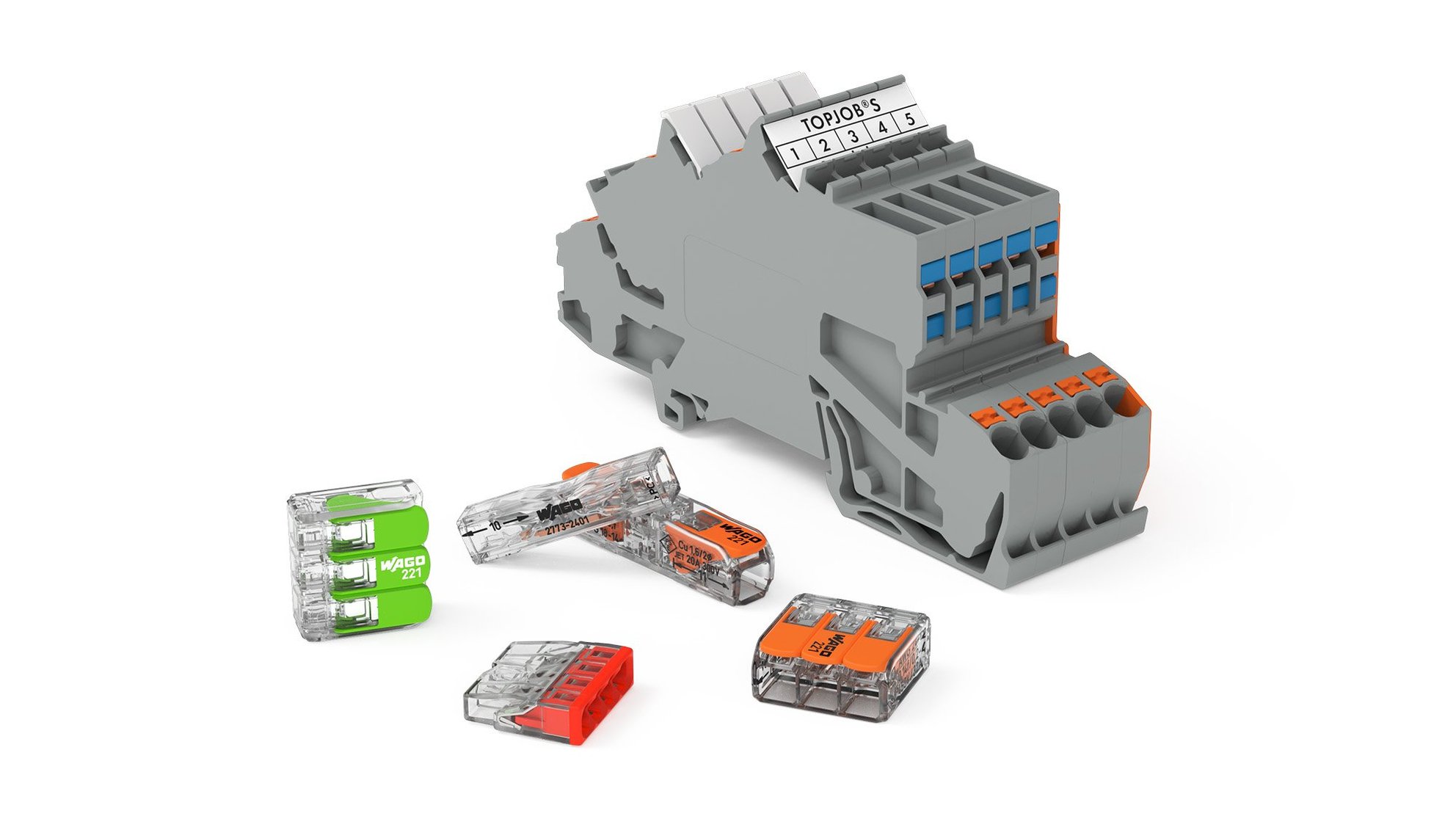
Spring clamp electric wire connectors maintain consistent clamping force without operator torque application and do not loosen under vibration. Screw terminals require correctly torqued installation to achieve specified clamping force and require periodic retightening in vibration environments. Push-in connectors provide fast installation without tools but may have lower current capacity and vibration resistance than screw or spring clamp alternatives for the same wire size.
What the Research Shows
According to Electrical Contractors Association Germany DKE Wiring Terminal Reliability Study 2022 loose or incorrectly torqued terminal connections account for 31 percent of electrical failures in industrial control panels identified during preventive maintenance inspections, making connection quality the most significant source of electrical failure in the panel population surveyed. The failure mode is specifically associated with screw terminal applications where installation torque was not verified and where periodic retightening was not included in the maintenance program. Spring clamp terminals in the same panel populations showed a failure rate 4.8 times lower for equivalent connection types.
What Happened After the Audit
The Pune panel builder’s customer audit led to a specification review that identified three categories of panel application where the builder had been defaulting to screw terminal connectors without evaluating whether the application environment required a different connection technology. For all vibration-intensive applications, the specification was updated to require spring clamp electric wire connectors. For applications involving fine-stranded wire, which is more prone to strand spread under screw torque, the specification was updated to require ferrule termination before screw terminal installation. For high-density signal wiring applications, push-in spring terminals were specified for their installation speed advantage where current capacity requirements permitted.
The Key Takeaway
Electric wire connector selection in industrial panel building that matches connection technology to application environment is the practice that prevents connection-related failures over the panel’s operational life. The specification alignment exercise that identified the mismatch in the Pune case required less than a day of engineering review. The audit that discovered the mismatch required a full customer site visit and a remediation panel rework that was substantially more expensive than a correct initial specification would have been.
According to IEC 60947-7-1 Low Voltage Switchgear and Control gear Terminal Blocks Standard 2009 the terminal block standard specifies minimum performance requirements for screw terminal, spring clamp, and push-in connection technologies across temperature range, current capacity, and vibration resistance categories. Specifying electric wire connectors to the relevant categories of this standard for each application environment provides a systematic basis for connector technology selection that reduces the risk of application-environment mismatch.