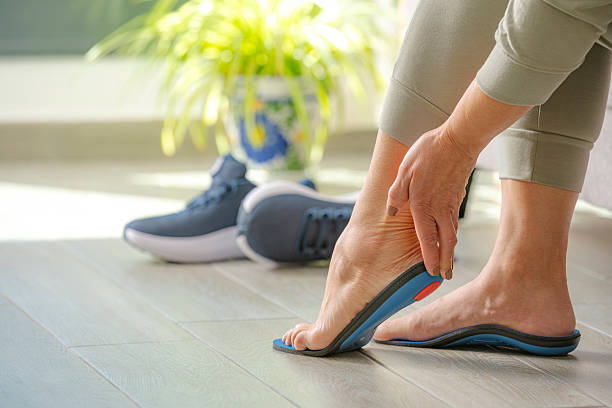
Foot pain has a funny way of changing how you do everything. You walk less, avoid certain shoes, and maybe even stop doing activities you enjoy because your feet just hurt. For some people, custom made orthotics become part of the solution, while others swear by a pair of insoles picked up from a pharmacy or sporting goods store. So, what’s actually different between the two? Quite a bit, honestly. Both are designed to support your feet, but they are not made in the same way, and they don’t address foot problems with the same level of precision. Knowing the difference can save you money, discomfort, and a lot of trial and error.
What Are Over-the-Counter Insoles?
Over-the-counter insoles are pretty much what they sound like. They are mass-produced inserts made to fit a range of foot shapes and shoe sizes. You’ll find versions marketed for arch support, cushioning, running, standing all day, heel pain and general comfort. Some are soft and squishy, while others are firmer and more structured. They can be useful, especially if your feet are simply tired or you need a little extra cushioning in a particular pair of shoes. The problem is that a generic insole doesn’t know anything about your feet. It can’t account for how you walk, whether one foot differs from the other, or where your pressure is actually landing. It’s a one-size-fits-most approach. Sometimes that’s enough. Sometimes it really isn’t.
How Custom Made Orthotics Are Different
Custom made orthotics are built around your individual feet rather than a general foot shape. A podiatrist or other qualified foot professional assesses things such as your foot structure, alignment, walking pattern, pressure points and the problems you’re experiencing. Depending on the assessment, measurements, scans, molds or other techniques may be used to create an orthotic designed specifically for you. That matters because feet aren’t always symmetrical. One arch might behave differently from the other. You may also put more pressure through one side of your foot without even realizing it. A custom device can be designed to provide support where you actually need it, rather than hoping a standard insert happens to get things right.
Do You Really Need Custom Orthotics?
Not everybody needs custom orthotics. That’s worth saying because there’s no reason to spend more money if a basic insole does the job. If you have mild foot fatigue and mainly want cushioning, an over-the-counter option may be perfectly reasonable. But ongoing pain is another story. If you’ve tried different shoes and generic insoles without much improvement, there may be something deeper going on. Flat feet, high arches, abnormal foot mechanics, recurring heel pain, certain sports injuries and other structural issues can sometimes benefit from more targeted support. The key is figuring out what’s causing the problem first. Otherwise, you’re just buying inserts and hoping for the best.
Comfort Is Not the Same as Correction
This is where people sometimes get confused. A soft insole can feel fantastic when you first put it in your shoe. That doesn’t necessarily mean it is correcting the reason your foot hurts. Cushioning and support are useful, but they do different jobs. Custom orthotic devices may be designed to influence how your foot moves and how pressure is distributed as you walk or stand. They can also help reduce excessive strain on certain areas. An over-the-counter insole generally focuses more on broad comfort and support. Neither option is automatically better for every person. It depends on what your feet are doing and what you’re trying to fix. Comfort is great. But if the underlying mechanical issue is still there, comfort alone may not be enough.
When Plantar Fasciitis Changes the Picture
Heel pain is one situation where choosing the right type of support can make a real difference. People dealing with plantar fasciitis often notice pain under the heel or along the bottom of the foot, especially with their first steps after getting out of bed. There are several plantar fasciitis treatments, and footwear changes, stretching, activity adjustments and supportive devices may all have a role depending on the individual. An insole can provide cushioning and arch support, but if your foot mechanics are contributing heavily to the problem, a custom orthotic may offer more specific support. It’s not a magic cure, though. That part gets oversold. A proper assessment still matters, particularly when pain has been hanging around for weeks or keeps coming back.
Which Option Is Better for Active People?
For runners, gym-goers, workers who stand all day, and people who simply spend a lot of time on their feet, the answer isn’t always obvious. Activity puts repeated stress through your feet, ankles, knees and sometimes even your hips. If your foot mechanics are off, that repeated loading can become a nuisance pretty quickly. An off-the-shelf sports insole may work well for someone who needs additional cushioning and doesn’t have a significant biomechanical problem. Custom orthotics can be more useful when there are specific alignment or pressure issues that need addressing. Your shoes matter too. A good orthotic shoved into a terrible, worn-out shoe won’t suddenly make the shoe good. You still need appropriate footwear with enough room and stability.
Cost, Longevity, and the Bigger Picture
There’s no getting around it, custom orthotics generally cost more than store-bought insoles. That can make the cheaper option tempting, especially when you see shelves full of products promising instant relief. But price shouldn’t be the only thing you consider. If you keep buying different generic insoles because none feel quite right, the savings disappear pretty fast. A properly made custom device may also last for years with appropriate care, although lifespan varies depending on the material, your activity level and how often you use them. More importantly, the right support can help you stay active and comfortable instead of constantly working around foot pain. That’s a bigger value than the price tag alone.
Getting the Right Support for Your Feet
Choosing between custom and over-the-counter support really comes down to the problem you’re trying to solve. If your feet are generally healthy and you just want a little extra cushioning, start simple. There’s no need to make things complicated. But persistent pain, recurring injuries, unusual wear on your shoes or symptoms that don’t improve with basic measures are good reasons to have your feet assessed. A professional can look at your foot structure and movement instead of guessing from a box on a store shelf. And if custom orthotics are recommended, they can be adjusted around your specific needs. That’s the real advantage. It isn’t about having the fanciest insert. It’s about having support that actually makes sense for your feet.
Conclusion: Choosing What Your Feet Actually Need
At the end of the day, both over-the-counter insoles and custom orthotics have their place. Generic insoles are affordable, accessible and can provide useful cushioning for everyday discomfort. Custom made devices are more targeted and can be valuable when foot structure, alignment or movement is contributing to ongoing problems. So don’t automatically assume expensive means better, but don’t assume cheap means good enough either. Pay attention to what your feet are telling you. If pain keeps returning, get it checked instead of endlessly swapping insoles. Your feet carry you around all day. They deserve a solution based on what they actually need, not just what happens to be sitting on a store shelf.